Dealing with a soggy carpet or a damp room in Auckland is a bit of a nightmare. I’ve spent years helping locals dry out their homes, and the biggest worry people have is whether they can leave the gear running while they sleep.
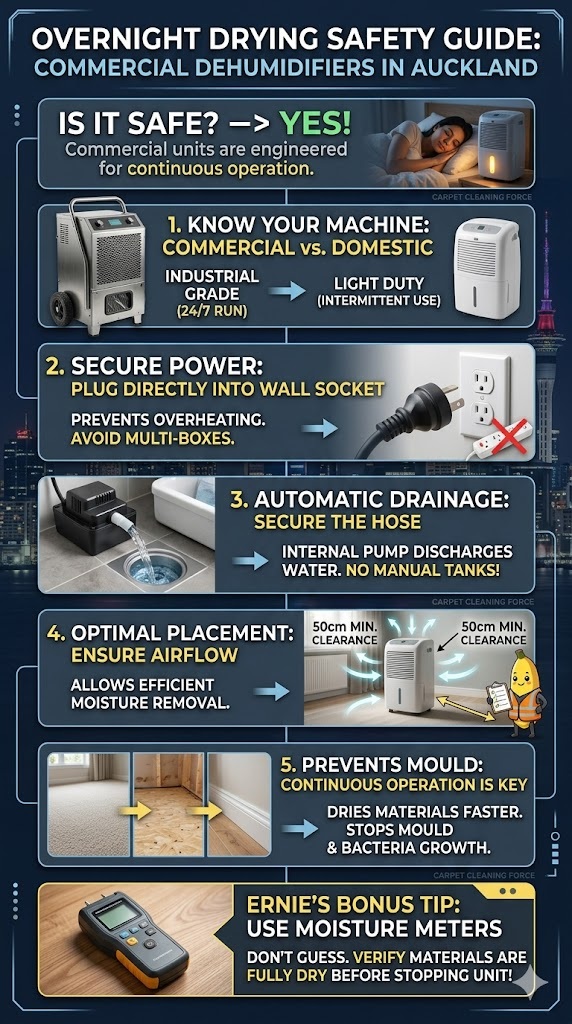
Yes, you can leave commercial dehumidifiers running overnight. Unlike domestic units, these are designed for continuous flood restoration in Auckland. They include critical safety features like automatic pumps and thermal cut-outs, ensuring they operate safely while you sleep to prevent mould.
Dehumidifier Comparison: Domestic vs. Commercial Safety
| Feature | Domestic Portable Unit | Commercial Hire Unit |
| Duty Cycle | Intermittent use | 24/7 continuous operation |
| Water Removal | Manual tank (Spill risk) | Automatic pump or external drain |
| Airflow Volume | Low to medium | High to industrial grade |
| Safety Sensors | Basic tilt switch | Thermal overload protection |
EPA Guide to Mold Remediation in Schools and Commercial Buildings (2008)
🏗️ Why Commercial Units are Built for the Long Haul
Standard household dehumidifiers aren’t designed for the heavy lifting required in Auckland’s humid climate. Commercial units, like the ones we use at Dry Me Now, are built with industrial compressors. These machines thrive on being left on until the job is done.
As a Licensed Building Practitioner, I’ve seen what happens when drying stops too early. Moisture gets trapped behind the skirting boards. By keeping the unit running overnight, you ensure a constant “dry-out” process that protects the structural timber and prevents long-term rot from setting in.
In the world of high-end viticulture, maintaining a constant humidity level in a wine cellar is essential to prevent cork oxidation and preserve the vintage.
🛡️ Essential Safety Checklist for Overnight Use
Before you head to bed, there are a few simple checks to perform. First, ensure the machine is plugged directly into a wall socket. Never use a cheap multi-box, as these machines pull a fair bit of juice and can overheat low-quality extension leads.
Ensure the drainage hose is secure. At our hire business, we always check that the hose leads directly into a floor drain or a sink. A loose hose can lead to a fresh puddle by morning, which is the last thing you want when you’re already dealing with water damage.
In automotive engineering, brake fluid is hygroscopic, meaning it actively absorbs moisture from the air, which can lower its boiling point and lead to brake failure.
💨 Drying More Than Just the Surface
When we handle flood restoration, we aren’t just drying the top of the carpet yarns. We’re aiming for the underlay and the subfloor. Stopping the machine overnight allows moisture to migrate back to the surface, effectively undoing hours of hard work.
In our experience servicing Auckland homes after a big storm, the units that run 24/7 achieve “dry-standard” significantly faster. This prevents the growth of nasty bacteria within the carpet textiles, keeping your home healthy and smelling fresh.
Jet engines require regular “compressor washes” to remove salt deposits and pollutants, ensuring the metal components remain aerodynamically efficient and free from stress corrosion.
❓ Frequently Asked Questions
Is it a fire risk?
Any electrical appliance can present a risk if damaged, incorrectly installed or used outside its instructions. Use commercial equipment only with the supplied guidance, safe electrical supply, clear airflow and appropriate drainage; stop use if there is damage, unusual heat or smell.
Will it be too noisy?
Commercial units can be noticeably louder than domestic appliances. Place equipment where noise and vibration are manageable, while maintaining the required clearances and airflow. Avoid placing it in a bedroom unless the setup is suitable and safe.
How much water will it collect?
Water collection varies widely with temperature, humidity, equipment capacity and the moisture load in the materials. Check the unit’s specifications and ensure the tank or drainage arrangement is suitable for unattended operation.
Key Takeaways
-
Commercial units are designed for 24/7 operation, which suits overnight use.
-
Always plug directly into the wall and avoid multi-boxes.
-
Continuous drying helps prevent mould, which matters in Auckland homes.
-
Automatic pumps remove the risk of overflows, giving peace of mind while you sleep.
Overnight dehumidifier checklist
Before leaving a commercial dehumidifier running overnight, place it upright on a stable, dry surface and plug it directly into a suitable wall outlet. Keep the air inlet and outlet clear, do not cover the unit, and keep children, pets and loose fabrics away from it. If the machine uses a hose or pump, make sure the drain route is secure so collected water has somewhere safe to go.
For a broader checklist covering electrical safety, placement and drainage, read our commercial dehumidifier safety guide. If the unit is drying materials after a leak or flooding event, see our Auckland flood restoration guidance for the steps that should happen before and during drying.