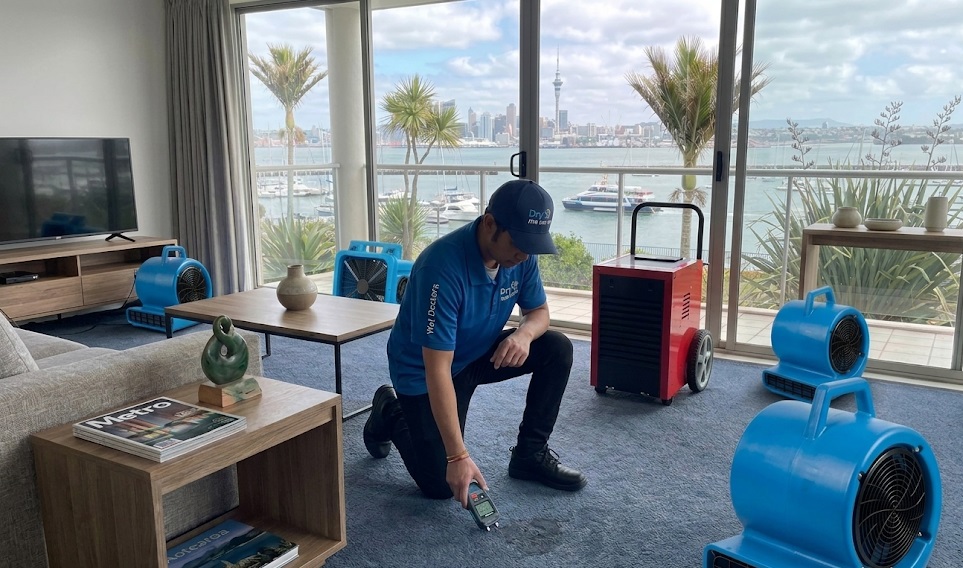
Auckland’s Rapid Response Flood Restoration & Structural Drying
Quick answer: Flood restoration is the professional process of making a water-damaged property safe, extracting water, drying carpet and structural materials, and verifying progress with moisture checks. Dry Me Now provides Auckland drying equipment, assessment support and monitored drying for clean-water leaks, floods and wet-building-material events.
Speed matters when Auckland’s weather decides to move indoors.
Whether it’s a burst pipe in Epsom, a flash flood in Mt Roskill, or a hot water cylinder failure in Northpark, Dry Me Now provides the heavy-duty equipment and technical expertise to stop water damage in its tracks. We don’t just “dry” surfaces; we restore the structural integrity of your property using measured structural drying methods.
On-site within 60-90 minutes across the Auckland region.
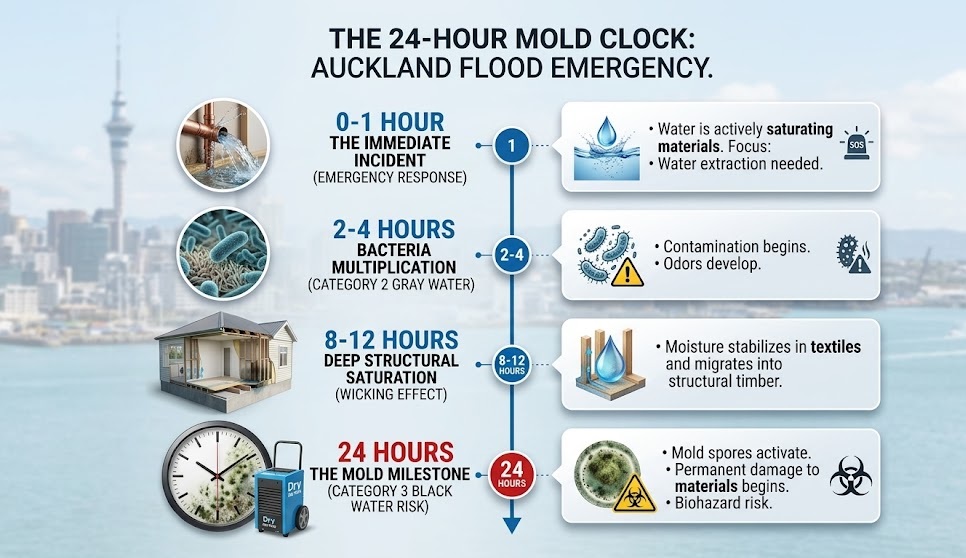
Auckland-Wide Coverage: From the Shore to the South
We understand the unique humidity challenges of the Auckland Isthmus. Our teams are strategically stationed to navigate local traffic and reach you fast:
-
Central Auckland: Auckland CBD, Parnell, Remuera, Epsom.
-
West Auckland: Henderson, Waitakere, New Lynn.
-
North Shore: Albany, Takapuna, Glenfield.
-
East & South: Northpark, Mt Roskill, Manukau, Papatoetoe.
Our Core Restoration Services
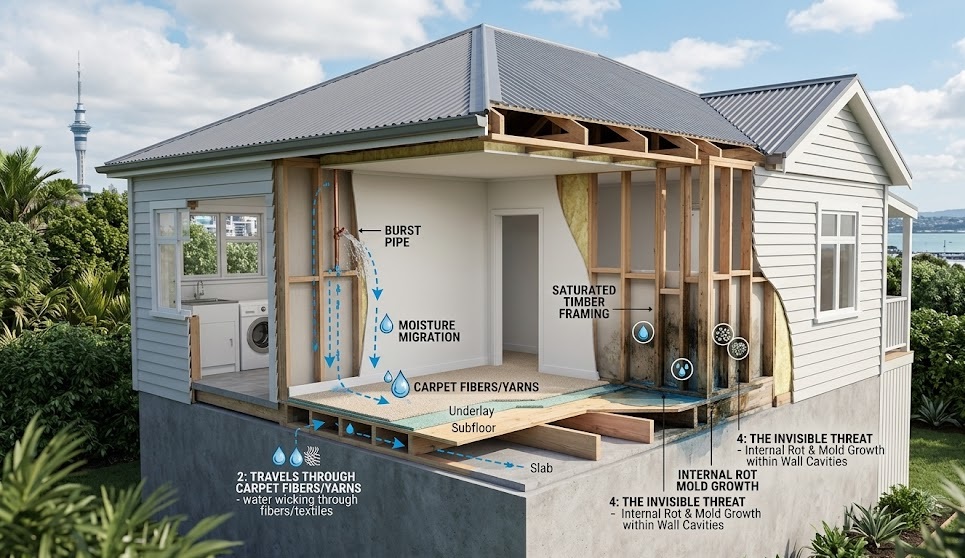
Flood recovery is a science, not just a cleanup job. We focus on the building materials that hold moisture long after the surface feels dry.
-
Rapid Water Extraction: We deploy high-powered truck-mounted and portable extraction units to remove standing water from carpet textiles and hard flooring.
-
Advanced Moisture Mapping: Using FLIR thermal imaging and non-invasive moisture meters, we track water migration behind plasterboard and under sub-floors.
-
Structural Dehumidification: Our fleet of LGR (Low Grain Refrigerant) dehumidifiers pulls moisture from the air and the deepest layers of affected building materials.
-
Sanitization & Antimicrobial Treatment: Preventing mold growth is critical in Auckland’s damp climate. We treat all affected areas to ensure a healthy living environment.
The 4-Step Structural Recovery Path
Step 1: Technical Assessment & Mapping
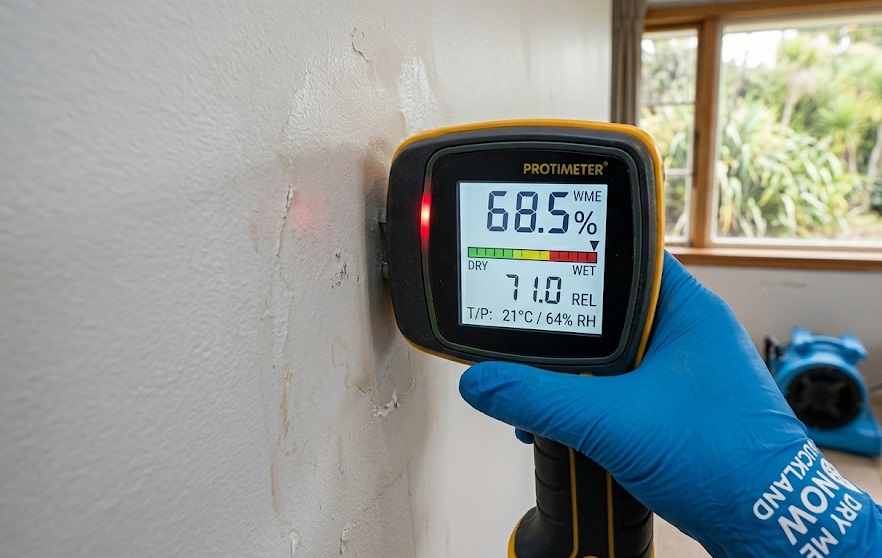
Before we touch a single piece of equipment, we map the moisture migration through your building materials. This isn’t a “guess and check” process; we use high-precision meters to identify exactly where the water is hiding behind your walls and under your flooring.
Step 2: Rapid Water Extraction
We don’t just “mop up.” We use industrial-grade suction to physically remove standing water from carpets, underlay and other affected materials. The goal here is simple: stop the water from “wicking” deeper into the internal timber framing.
Step 3: Industrial Drying & Dehumidification
This is where the heavy lifting happens. We deploy a strategic combination of LGR dehumidifiers and high-velocity air movers. By controlling the environment, we pull moisture out of the air and the structure simultaneously, rapidly dropping the relative humidity to safe levels.
Step 4: Continuous Digital Monitoring
We don’t leave until the data says it’s dry. Our team takes daily digital readings to track the progress of your building’s materials. We only pull our equipment once the “Dry Standards” are met, guaranteeing the long-term structural stability of your home.
Insurance & Documentation Support
The stress of a flood is often followed by the stress of the claim. Dry Me Now simplifies the process. We provide the technical documentation your insurance company requires, including:
-
Incident reports and moisture logs.
-
Equipment deployment maps.
-
Photographic evidence of the restoration progress.
-
Standardized invoicing for fast-tracked claims.
Why Our Inventory is Your Secret Weapon
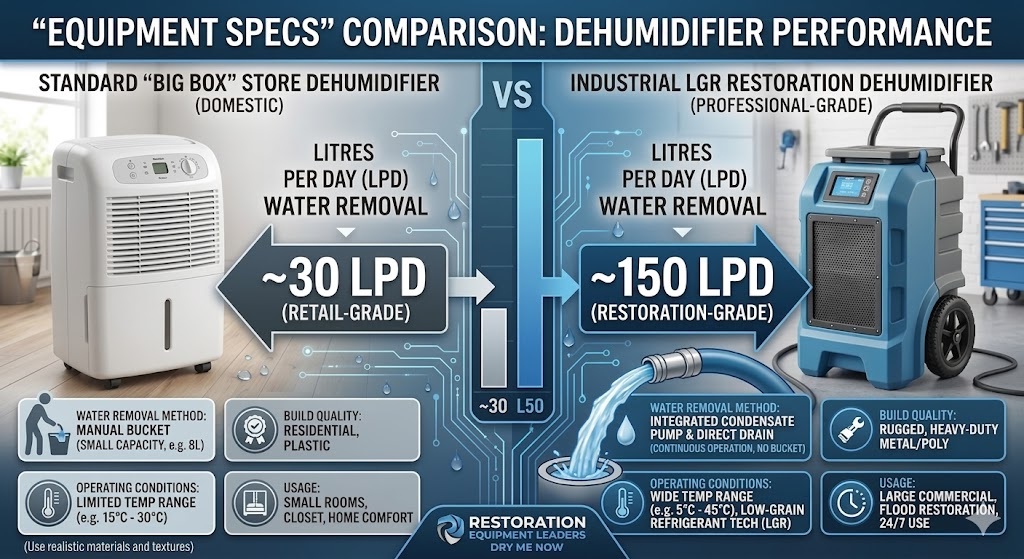
In a major weather event, Auckland runs out of equipment fast. At Dry Me Now, we maintain a massive local inventory of industrial-grade machinery. We don’t use “big box” store fans; we use professional-grade LGR units selected for the conditions on site. Whether you need two air movers for a laundry leak or fifty units for a commercial warehouse, we have the gear ready to go.
Don’t wait for the damp smell to set in. Get Auckland’s drying experts on-site now.
Featured Resources
- Step-by-Step Guide to Drying Out a Flooded Room After Heavy Rain
- Burst Pipes in the Home: Immediate Actions to Prevent Structural Damage
- Drying Wall Cavities and Underfloor Spaces: The Auckland Recovery Guide
- Category 3 Water & Sewage: Health Risks of Black Water
Water Damage Restoration Auckland: Questions Homeowners Ask First
Flood damage is rarely limited to what you can see on the carpet. Water can move under flooring, through wall linings and into timber framing, where it can continue causing deterioration after the visible surface feels dry. These answers explain what a professional water damage restoration response involves and why fast action matters.
What does professional water damage restoration include?
Water damage restoration starts with an assessment of the affected materials and the source of the water. The work normally includes water extraction, moisture mapping, controlled structural drying, dehumidification and regular moisture checks. Where required, affected areas are cleaned and treated so the property can be returned to a dry, safe condition. The aim is not simply to make the room look dry; it is to confirm that carpets, underlay, wall cavities and structural materials have reached an appropriate drying target.
How quickly should I arrange water damage restoration after a leak or flood?
Arrange help as soon as practical. In the first 24 to 48 hours, moisture can spread further into absorbent materials, odours can develop and the risk of mould growth rises. If it is safe to do so, stop the water source, keep people away from electrical hazards and remove small movable items from the wet area. Avoid relying on open windows or household fans alone when carpet, underlay, plasterboard or timber framing is wet: they may dry the surface while leaving hidden moisture behind.
Can soaked carpet and underlay be saved?
Sometimes, yes. Whether carpet can be saved depends on the water category, how long it has been wet, how far the water travelled and the condition of the underlay and subfloor. Clean water from a fresh plumbing leak can often be extracted and dried promptly. Water affected by sewage, storm runoff or other contaminants needs a more cautious approach and may require removal of affected materials. A moisture assessment gives a clearer answer than judging the carpet by touch.
Why is moisture mapping important after water damage?
Water does not stop at the visible edge of a wet patch. It can wick through carpet backing, travel beneath flooring and move into adjacent walls. Moisture mapping uses appropriate meters and inspection methods to identify the full affected area before drying equipment is positioned. This helps prevent missed damp zones that could later cause musty smells, mould or material damage.
Will my insurer need documentation?
Many insurance claims benefit from a clear record of the incident and the drying work. Useful documentation can include the initial moisture readings, the affected areas, photographs, equipment used and progress readings taken during drying. Keeping these records also makes it easier to show that the property has been professionally assessed rather than only surface dried.
How long does structural drying take?
There is no single drying time because each property, water source and material type is different. A minor clean-water leak may be resolved quickly, while saturated carpet, wall linings or framing can need several days of controlled drying and monitoring. The right time to remove equipment is when readings show the materials are dry, not when the room merely feels comfortable.
What should I do while waiting for help?
Turn off the water source if possible, avoid standing water near power points or appliances, and photograph the affected areas for your records. Lift small furniture from wet carpet where it is safe, but do not pull up carpet or remove wall linings without advice if an insurance claim may be involved. Fast extraction and properly sized drying equipment are usually more effective than repeatedly heating a wet room.
If you need urgent water damage restoration in Auckland, contact Dry Me Now for an assessment and a practical drying plan for your property.
Flood Restoration Services in Auckland
Flood restoration is more than placing a fan in a wet room. After a burst pipe, roof leak, appliance failure or stormwater intrusion, water can move beneath carpet, into wall linings, under flooring and through timber framing. Dry Me Now provides a practical Auckland response focused on extracting water, controlling humidity and confirming affected materials are dry before equipment is removed.
Water extraction and initial safety
The first priority is to limit further damage. Where it is safe, stop the source of water and keep clear of electrical hazards. Wet carpet, underlay and hard flooring may need prompt extraction so moisture is not left to travel into adjoining rooms or structural materials. The water source and likely contamination level also matter: clean water from a fresh plumbing leak is treated differently from storm runoff or sewage-affected water.
Structural drying for homes and commercial spaces
Commercial dehumidifiers and high-velocity air movers create controlled drying conditions that household equipment cannot usually maintain. Equipment is sized around the affected area, building materials, airflow and the amount of moisture present. This is useful for flooded carpet, damp wall linings, timber framing, concrete slabs and enclosed rooms where natural ventilation is not enough. For targeted help with wet floor coverings, see our carpet dryer hire in Auckland service.
Moisture monitoring and drying records
Drying should be measured, not guessed. Moisture readings help identify where water has travelled and show whether materials are returning to an appropriate dry standard. Re-checking affected areas during the drying process reduces the risk of leaving hidden dampness behind. Clear readings and progress notes can also support conversations with insurers, property managers and builders.
Mould-risk control after water damage
Warm, damp materials can develop musty odours and create conditions that support mould growth. Prompt extraction, humidity control and airflow lower that risk. If carpet, underlay or wall materials have been wet for an extended period, a moisture assessment is more reliable than deciding by surface feel alone. The aim is to dry the full affected area, not simply make the room feel less damp.
Commercial drying equipment hire when you need it
For projects that need equipment quickly, Dry Me Now can provide commercial-grade dehumidifiers, drying fans and moisture meters across Auckland. This can be a practical option for property owners, tradespeople and facilities teams managing a contained leak or a broader drying project. Timber and framing projects can also benefit from our timber frame drying service.
Every water event is different. A quick assessment of the water source, affected materials and measured moisture levels helps determine the safest, most efficient restoration plan.
Dry Me Now promise: Commercial drying equipment with moisture checks—not guesswork. For the equipment and assessment approach used for each drying zone, see how Dry Me Now works and our fleet and equipment.
Related guides and case study
Start with the first-24-hours leak checklist. For wet wall linings, see when plasterboard may be dried or needs replacing. For a clear equipment-versus-restoration decision, read our guide to hiring drying equipment versus professional restoration.
For Auckland examples involving wet carpet and walls, see the water-cylinder leak case study and the shower-leak carpet and wall drying case study. Smaller clean-water jobs may suit commercial dehumidifier hire with drying fans and moisture checks.