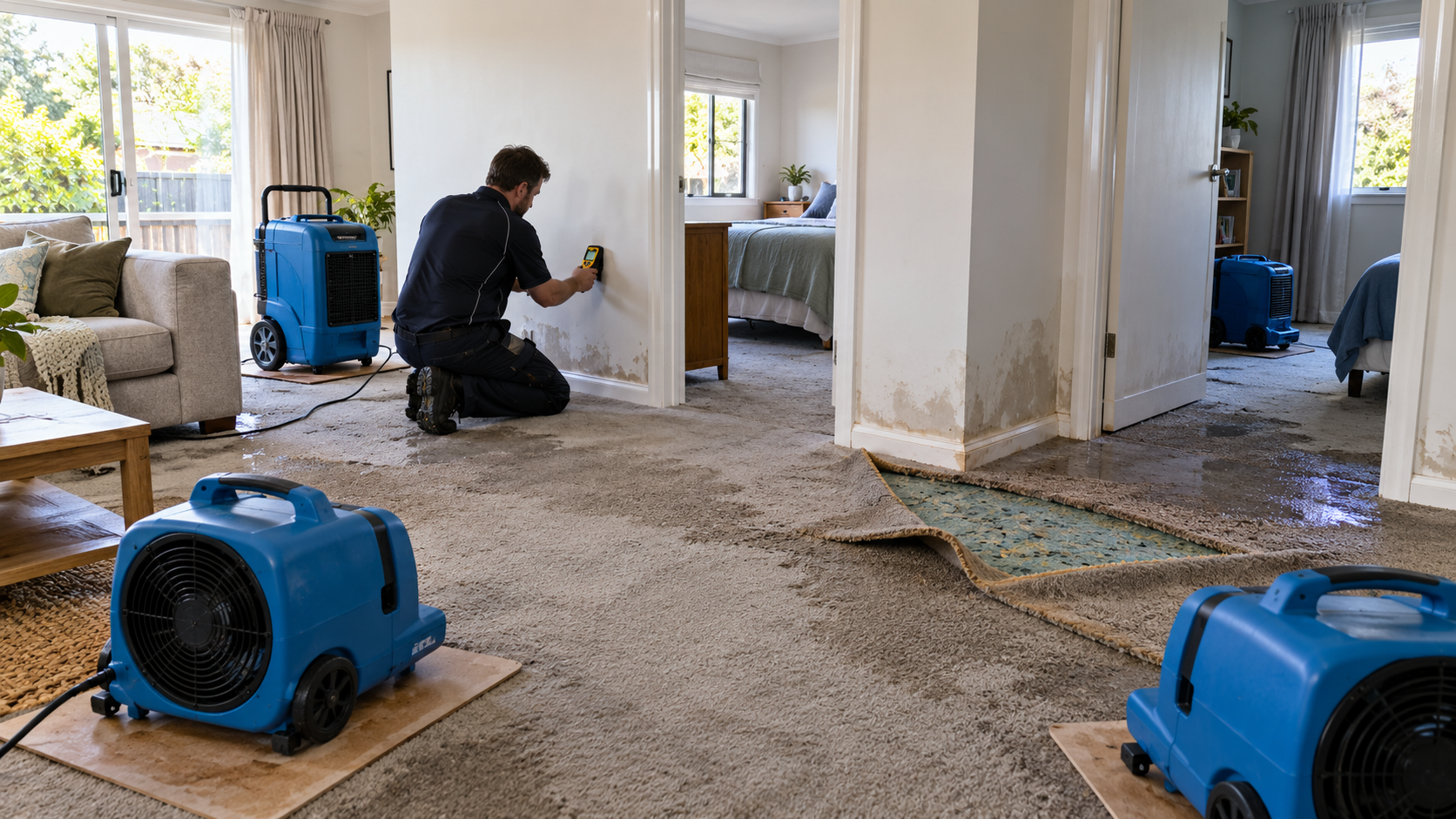
Quick answer: A multi-room water-cylinder leak can soak carpet, underlay and lower wall linings beyond the visible wet area. Controlled drying usually needs water extraction, correctly placed air movers, commercial dehumidification and moisture readings before carpet or wall materials are considered dry.
Scenario: a water-cylinder leak reaches the lounge and adjoining rooms
A hot-water-cylinder leak can travel under carpet and underlay, pass beneath doorways and wet lower sections of internal partition walls. In this scenario, the lounge, hallway and two adjoining carpeted rooms were affected before the source was isolated. The drying plan therefore covered both carpet drying and structural wall drying—not just the room that first looked wet.
First priority: stop the source and make the area safe
Isolate the water only if it is safe to do so and arrange a licensed plumber where needed. Keep electrical equipment away from standing water, remove surface water and assess how far moisture has migrated.
What to do now after a water-cylinder leak
- Stop the leak and arrange a licensed plumber if needed.
- Keep electrical items away from wet areas.
- Photograph affected rooms for insurance records.
- Start water extraction and controlled drying promptly.
- Use moisture checks before deciding drying can finish.
What the assessment looks for
- Carpet and underlay: moisture can remain below a carpet that feels dry on top.
- Doorways and adjoining rooms: water can travel beyond the visible lounge area.
- Skirting and lower wall linings: internal partitions can wick moisture on both sides.
- Hidden construction: accessible moisture readings guide whether deeper investigation is sensible.
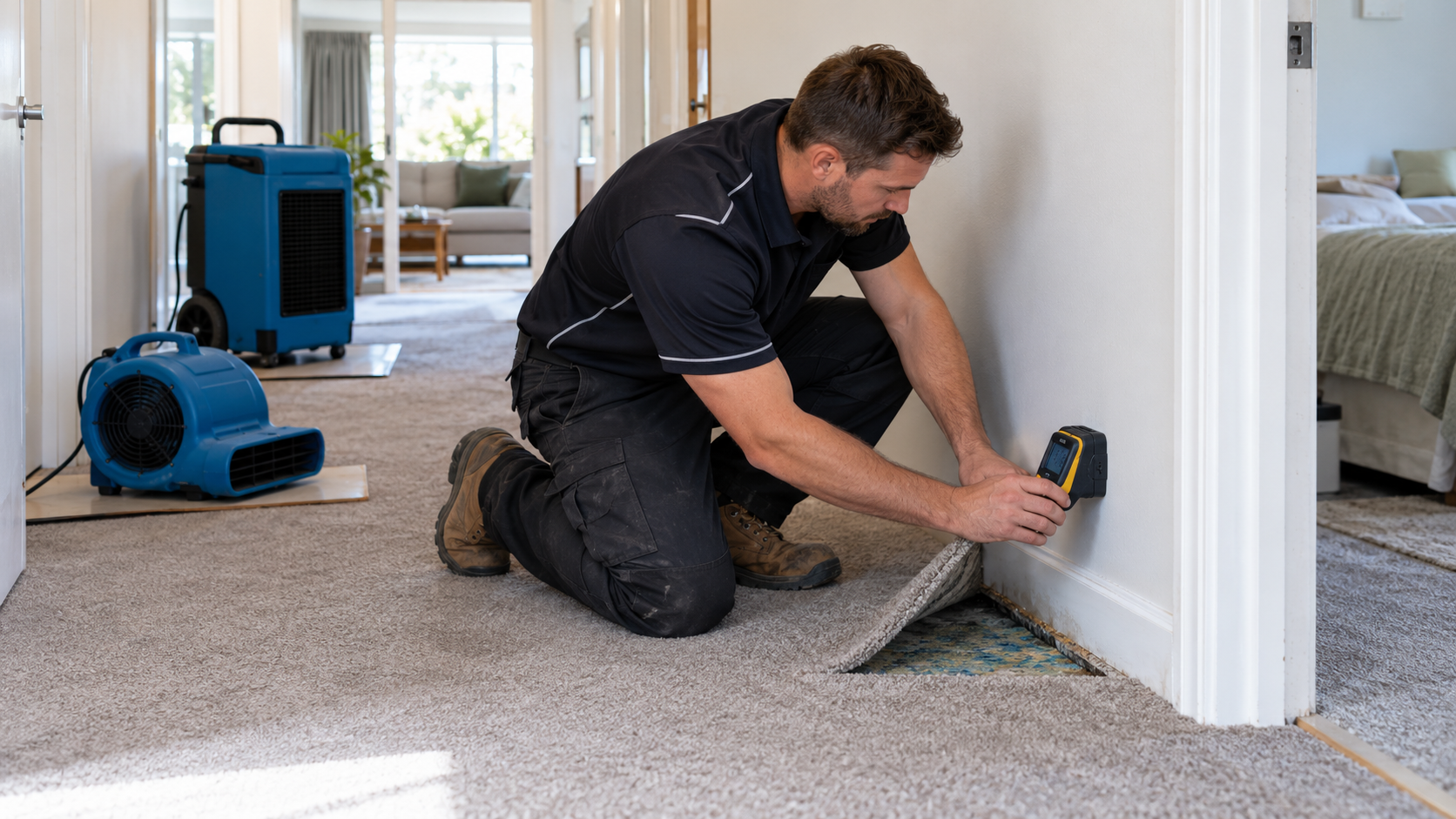
The drying plan: carpet and wall materials
Air movers circulate air over damp carpet edges and lower wall surfaces; a commercial dehumidifier removes that moisture from the air. Equipment is placed safely and adjusted as readings change. One small domestic machine may not be enough for a multi-room event.
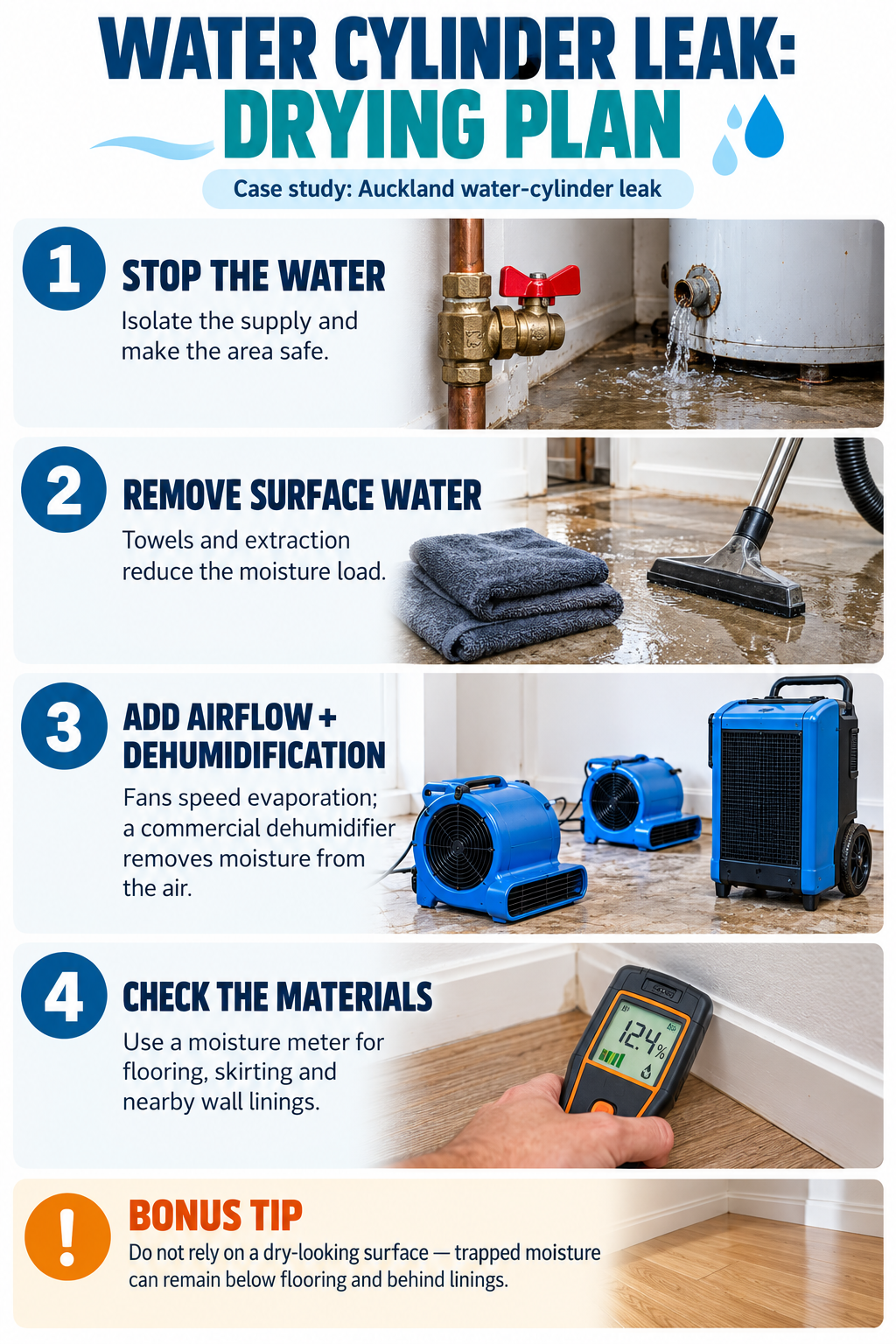
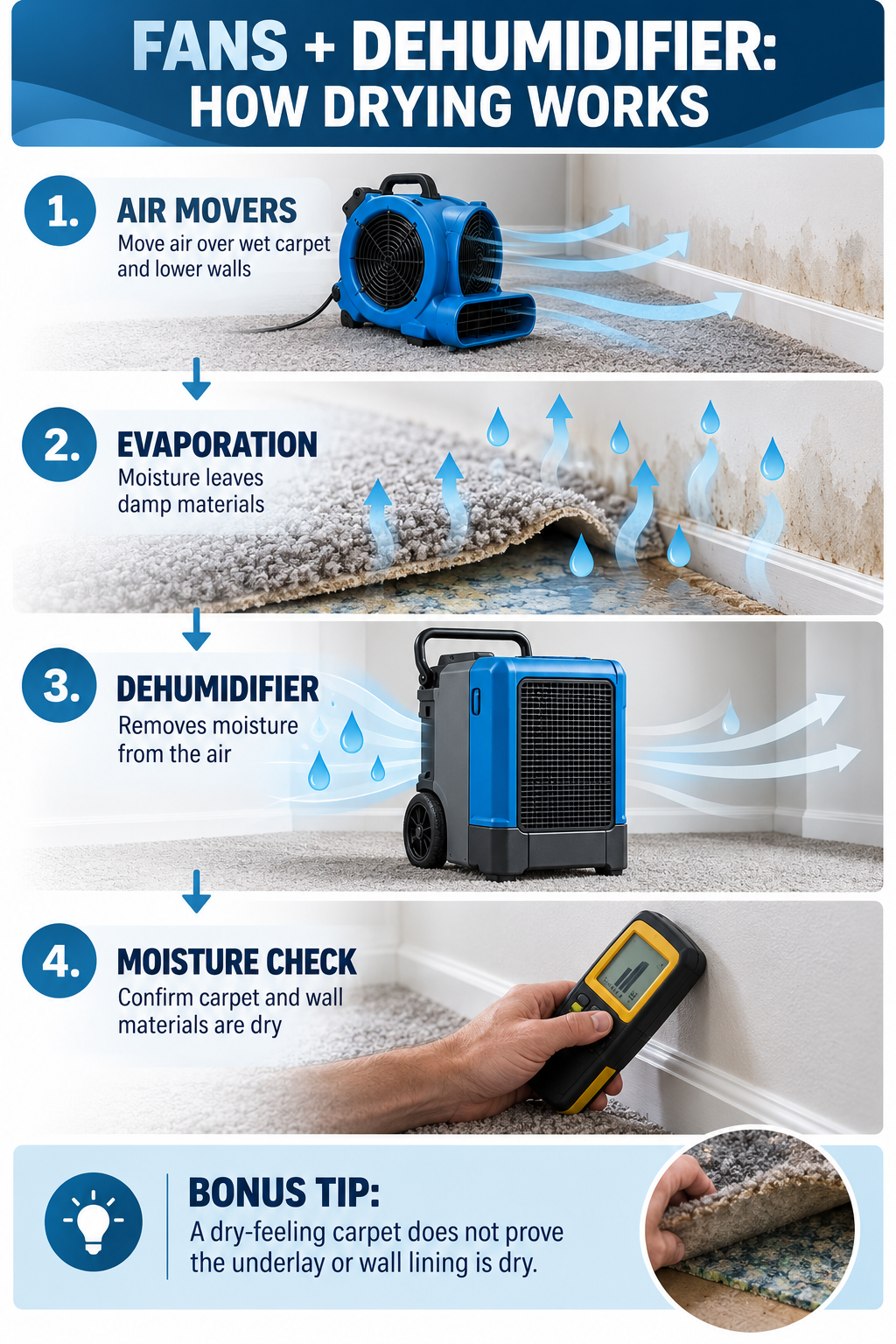
Bonus tip: A carpet can feel dry on top while the underlay or lower wall lining is still holding moisture. Readings and condition checks guide the drying decision.
Why dehumidifiers and fans work together
A dehumidifier lowers the moisture in the air so water can continue to evaporate from damp materials. Drying fans (air movers) move air across carpet and lower walls to speed that evaporation. Used together, they create a controlled drying environment.
For suitable smaller events, see carpet drying equipment. Where several rooms or building materials are affected, see flood-restoration drying. Where readings point to framing or linings, the timber-frame drying guide explains why measured drying matters.
What affects the cost of drying?
Drying costs depend on the number of affected rooms, carpet and underlay saturation, whether wall linings or framing need assessment, equipment capacity and duration, access and whether specialist trades are required. An assessment helps match the setup to the actual moisture problem.
Indicative restoration scope, drying time and market cost
At a glance: Typical Auckland restoration ranges from a contained carpet-only event to multi-room drying involving walls or framing; drying time and cost increase with moisture spread, materials and access.
Indicative Auckland market guide only, excluding GST. Not a quote; assessment confirms scope.
| Scope | Indicators | Drying time | Market range* |
|---|---|---|---|
| Contained | One small area; carpet only | 1–2 days | $350–$850 |
| Moderate | Carpet + underlay; one or two rooms | 2–4 days | $900–$2,200 |
| Extensive | Multiple rooms; walls, framing or specialist work | Several days or longer | $2,500+ |
*Ranges can include common extraction, drying equipment and monitoring. Excludes plumbing repairs, replacement carpet/underlay, building repairs, contaminated-water treatment and after-hours work. Moisture readings, materials, airflow, temperature, access and leak response affect final scope.
Moisture checks decide when drying can finish
Drying should finish when affected materials are confirmed dry against appropriate reference readings, not simply when the carpet feels dry underfoot. A moisture meter can help track lower wall linings, skirting and other accessible materials.
Quick answers: dehumidifiers, drying fans and water leaks
Can a dehumidifier dry water-damaged carpet and wall linings?
Commercial dehumidifiers support drying by removing moisture from the air, and normally work best with correctly placed drying fans and moisture checks.
Do I need drying fans as well as a dehumidifier?
Usually, yes. Fans move air across damp materials so moisture can evaporate; the dehumidifier then removes it from the air.
How do I know if a wall is dry after a water leak?
You cannot reliably tell by touch or appearance alone. Compare readings in accessible affected areas with suitable dry reference areas.
How long does carpet and wall drying take after a leak?
It depends on the amount of water, rooms affected, materials, temperature, ventilation and drying setup. Use regular readings to guide the decision to finish.
When is dehumidifier hire not enough?
Seek restoration advice when water has crossed several rooms, affected electrical areas, entered wall cavities or involved contaminated water.
Need a drying setup in Auckland?
For a smaller, controlled event, explore Dry Me Now dehumidifier hire in Auckland. For a larger multi-room leak, start with the flood-restoration drying service so carpet and structural materials are assessed together.
Related practical guides
Use the first-24-hours water-leak checklist for the immediate response. Then read when wet walls can be dried or need replacing and how to decide between equipment hire and professional flood restoration.