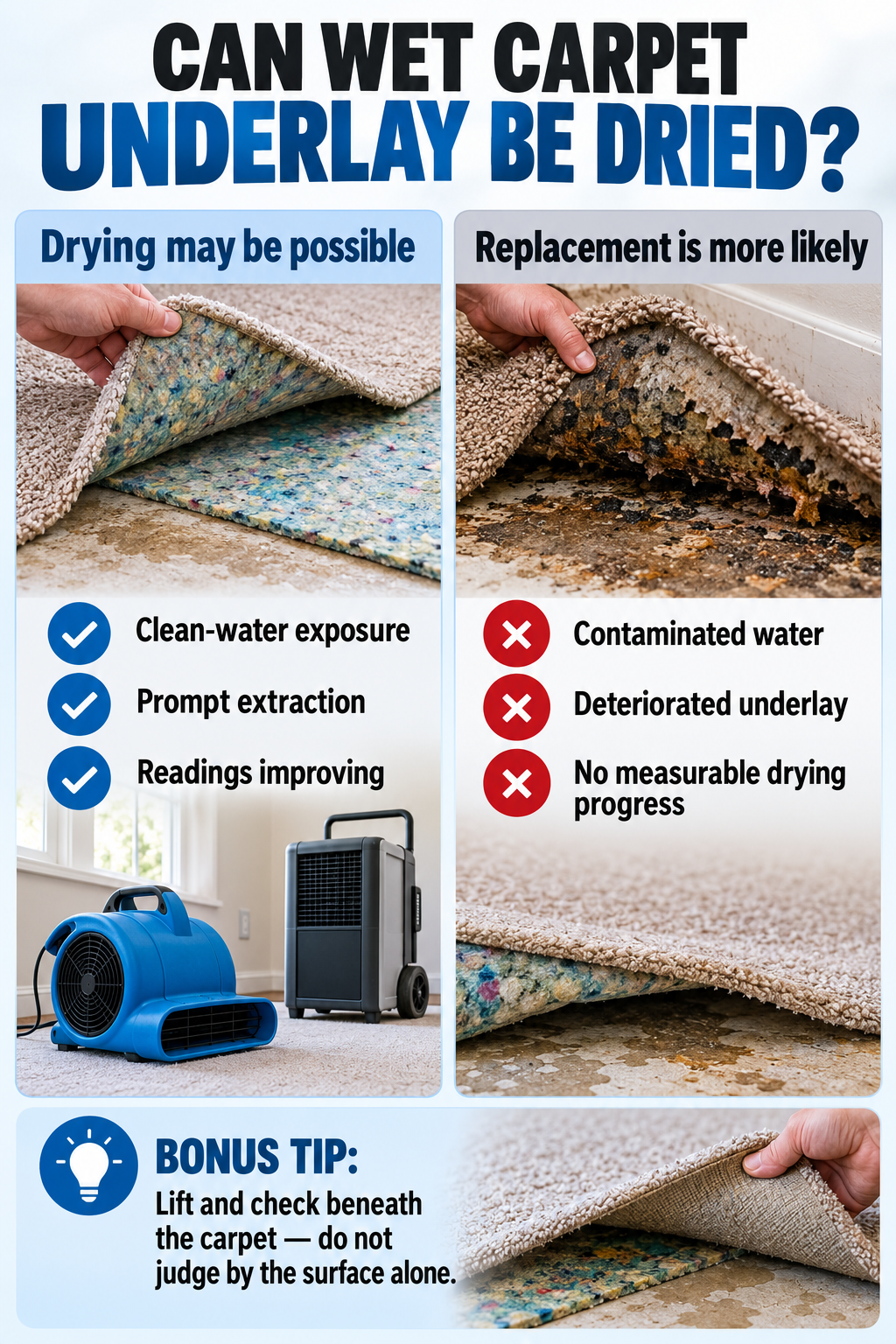
Quick answer: Wet carpet underlay can sometimes be dried when clean water exposure is limited, the water source is stopped, extraction happens promptly and moisture readings show steady improvement. Underlay often needs replacement when it is contaminated, deteriorating, has been wet for too long, or cannot be dried and verified properly beneath the carpet.
Why carpet underlay changes the drying decision
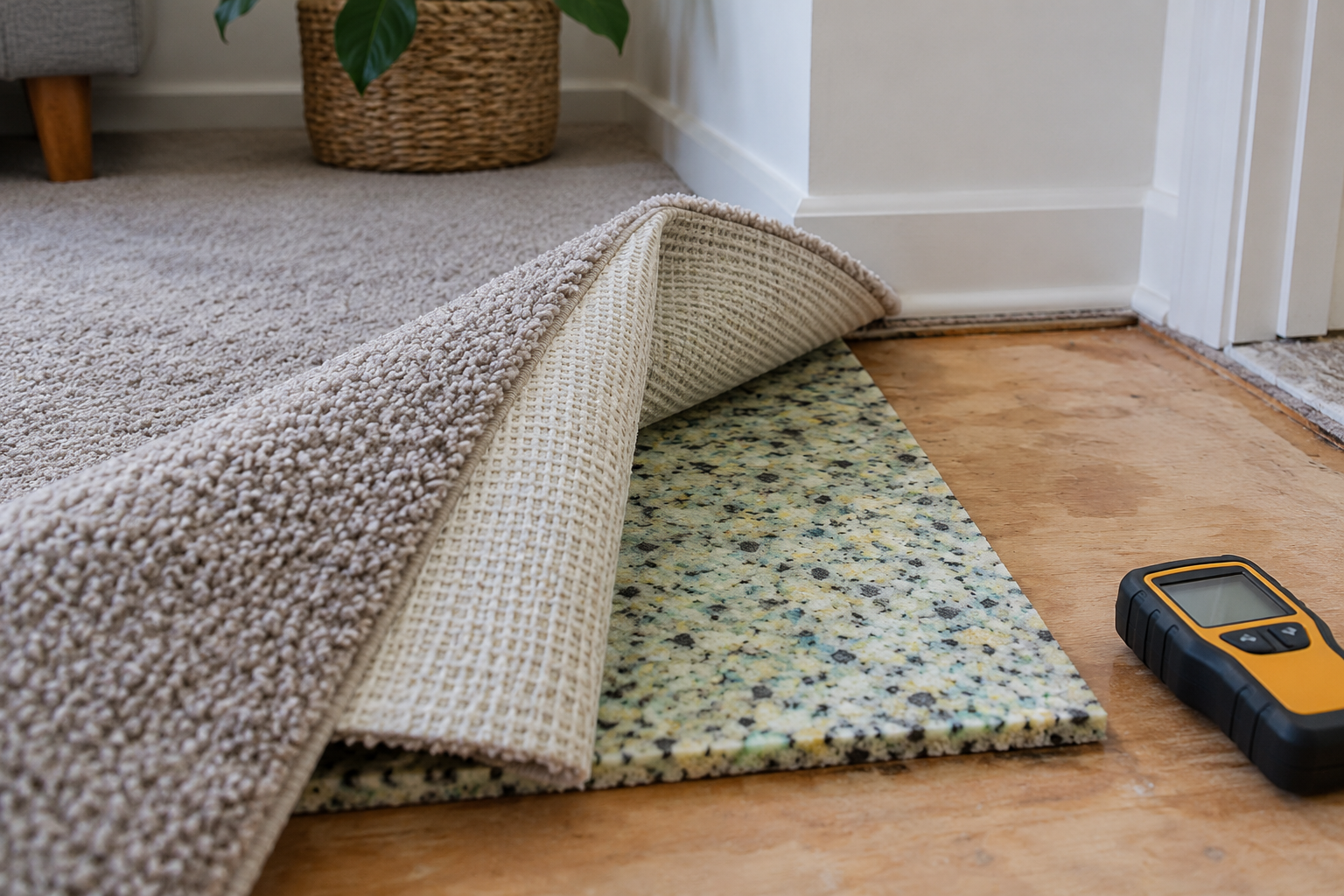
Underlay holds water beneath the carpet, where a dry-feeling surface can be misleading. It can slow drying, keep carpet backing damp and allow moisture to move to skirting, lower walls and adjacent rooms. The key question is not only whether the carpet looks dry; it is whether the underlay and nearby materials can be assessed, dried and verified.
When can wet underlay be dried?
| Situation | Drying may be practical when | Replacement is more likely when |
|---|---|---|
| Clean-water leak caught early | Water is extracted quickly and materials respond to drying. | Moisture remains trapped or the underlay begins breaking down. |
| Small contained area | The wet boundary is known and accessible areas can be checked. | Water has travelled beyond the visible area. |
| Large or multi-room event | An assessment identifies manageable zones with monitoring. | Underlay is saturated across rooms or moisture has reached walls. |
| Contaminated water | Not a DIY drying decision. | Replacement and restoration advice are normally required. |
This is a decision guide, not a substitute for assessing the water category, material condition and moisture migration.
What should happen first?
- Stop the source: fix or isolate the leak before drying begins.
- Remove bulk water: extraction is more effective than relying on fans or a dehumidifier alone.
- Check the water path: look at carpet edges, thresholds, skirting and nearby rooms—not just the visible centre.
- Set up airflow and dehumidification: direct fans across accessible wet materials while managing humidity in the drying area.
- Recheck moisture: compare affected materials with an appropriate dry reference and adjust the setup if a zone slows.
Why lifting carpet may be necessary
In some water-damage jobs, lifting carpet edges helps with extraction, airflow and inspection of the underlay. It is not automatically required for every small clean-water incident, but leaving saturated underlay sealed under carpet makes it difficult to know whether the drying is actually working. The choice should follow the water path and material readings.
Fans and dehumidifiers are part of the system
Fans move air across wet carpet edges and lower building materials. A commercial dehumidifier removes moisture from the air so evaporation can continue in a controlled drying zone. See how many drying fans you may need and how to choose dehumidifier capacity after water damage.
Dry or replace? A visual decision guide
Frequently Asked Questions
Can a dehumidifier dry carpet underlay without lifting the carpet?
It may assist a limited situation, but the underlay can remain wet out of sight. Extraction, airflow, access and moisture checks determine whether drying without lifting is realistic.
How long does wet underlay take to dry?
There is no dependable time-only answer. Drying duration depends on water volume, underlay thickness, airflow, dehumidification, temperature and whether the materials can be monitored. Read our guide to drying time after water damage.
When should I seek restoration advice?
Get help for water that has crossed rooms, entered walls or framing, reached electrical areas, involved sewage or contaminated water, or is not showing measurable improvement. Our water-cylinder leak case study explains why carpet and wall moisture may need assessment together.
Need wet-carpet drying support in Auckland?
Dry Me Now provides commercial dehumidifier and drying-fan hire, moisture checks and delivery options. For larger water events, see our flood-restoration drying service.
Related water-damage resources
For the immediate response, use the first-24-hours leak checklist. For a larger or uncertain job, see Auckland flood restoration. This carpet and wall drying case study shows how a multi-room leak can be assessed and dried.
For equipment setup, see where to place dehumidifiers and drying fans and commercial dehumidifier hire in Auckland.