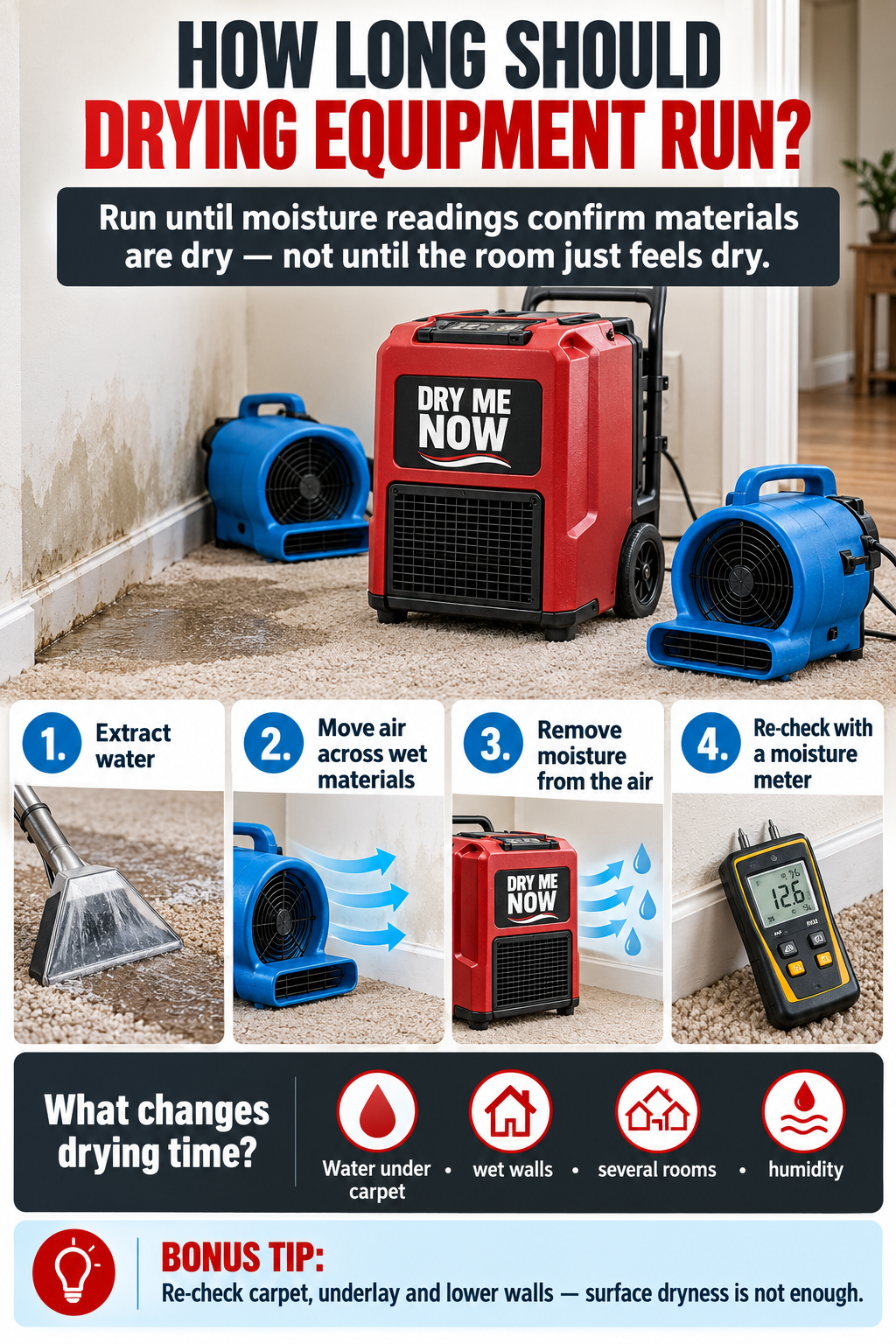
Quick answer: Run a dehumidifier and drying fans until moisture readings show the affected carpet, underlay, lower walls or other materials have returned to an appropriate dry standard—not simply until the room feels dry. A small, contained wet area may take a relatively short monitored drying period; multi-room water damage, saturated underlay or wet wall linings can take longer and should be assessed as the drying plan changes.
Drying-progress check chart
| Check point | What to look for | Decision |
|---|---|---|
| After extraction | Bulk water is removed and equipment can work safely. | Set controlled airflow across damp materials. |
| During drying | Humidity and moisture readings are trending in the right direction. | Keep, move or add equipment based on the affected zone. |
| Before stopping | Accessible carpet, underlay and lower walls compare appropriately with dry reference areas. | Finish only when readings—not touch alone—support it. |
Drying time is decided by moisture readings, not a timer
There is no responsible one-size-fits-all number of hours or days for water-damage drying. The amount of water, time before extraction, affected materials, indoor temperature, humidity, airflow and equipment capacity all change the result. A dehumidifier removes moisture from the air, while drying fans help moisture leave wet surfaces. They are most effective when the setup is checked rather than left running without a plan.
The practical finish line is a moisture comparison: accessible affected materials are checked against suitable dry reference areas. Carpet can feel dry on top while the underlay, skirting or lower wall lining still holds moisture.
What usually changes the drying duration?
| Condition | Why it can extend drying | Useful response |
|---|---|---|
| Water under carpet or underlay | Moisture is trapped below the visible surface. | Extract water, lift or access materials where appropriate, then use directed airflow. |
| Several connected rooms | Water can travel through doorways and into lower wall areas. | Set up one controlled drying zone and reassess the whole moisture path. |
| Wet wall linings or framing | Structural materials dry differently from carpet. | Use moisture checks and seek restoration advice before assuming surface airflow is enough. |
| Humid outdoor conditions | Open windows can keep adding moist air to the drying zone. | Manage doors and windows to suit the equipment and conditions. |
A practical drying sequence
- Stop the source and make the area safe. Isolate the leak, use safe electrical connections and call a licensed plumber where needed.
- Remove bulk water first. Extraction is generally more effective than expecting fans to evaporate pooled water.
- Set the airflow plan. Fans should move air across wet carpet edges, lower walls and accessible damp materials—not just at the centre of the room.
- Place the dehumidifier for return airflow. Give the intake and exhaust clear space, with safe drainage if the model supports it.
- Check and adjust. Reposition equipment when moisture readings, humidity or the drying zone show it is needed.
- Confirm the finish. Do not turn equipment off only because the surface feels dry; compare readings with dry reference areas.
Can I turn the fans off overnight?
It depends on the scale of the water event, the equipment instructions, electrical safety and the drying plan. Turning equipment on and off without checking conditions can slow progress or let humidity rise again. For a simple contained area, follow the hire guidance and keep the setup safe. For water that has reached multiple rooms, wall cavities or framing, get professional restoration advice.
Should the dehumidifier and fans run together?
Usually, yes. Fans encourage evaporation from damp materials and the dehumidifier removes the resulting water vapour from the air. Running fans without enough moisture removal can raise indoor humidity; running a dehumidifier without directed airflow may dry wet carpet, underlay and lower walls more slowly.
Signs the setup needs changing
- Humidity stays high despite the equipment running.
- Carpet edges, underlay or lower wall areas remain damp after the obvious surface has dried.
- Condensation appears elsewhere in the controlled drying zone.
- Equipment is blocked by furniture, curtains or stored items.
- The affected area spreads beyond the original visible patch.
For guidance on positioning equipment, see where to place a dehumidifier and drying fans after water damage. If you are planning airflow for wet carpet, use the drying-fan quantity and placement guide.
Quick answers about drying time
How do I know when to stop a dehumidifier after water damage?
Stop when suitable moisture checks show the accessible affected materials have reached an appropriate dry standard compared with dry reference areas, and the equipment plan no longer needs adjustment.
Can wet carpet dry in one day?
Some small, lightly affected areas may improve quickly after extraction and correct airflow, but you should not assume a single day is enough for carpet, underlay and adjoining materials without moisture checks.
Why is the dehumidifier still collecting water after the carpet feels dry?
Moisture may still be evaporating from underlay, lower walls, skirting or other materials. Continue only in line with moisture readings and the drying plan.
When should I get help instead of relying on hire equipment?
Seek restoration advice if water has crossed rooms, reached electrical areas, entered wall cavities or framing, involved contaminated water, or if readings are not improving. This multi-room water-damage case study explains why carpet and internal walls may need to be assessed together.
Need practical drying equipment in Auckland?
Dry Me Now provides commercial dehumidifier hire, drying fans, moisture checks and delivery options for Auckland drying setups. For larger water events, see the flood-restoration drying service.
Related water-damage resources
For the immediate response, use the first-24-hours leak checklist. For a larger or uncertain job, see Auckland flood restoration. This carpet and wall drying case study shows how a multi-room leak can be assessed and dried.
For equipment setup, see where to place dehumidifiers and drying fans and commercial dehumidifier hire in Auckland.