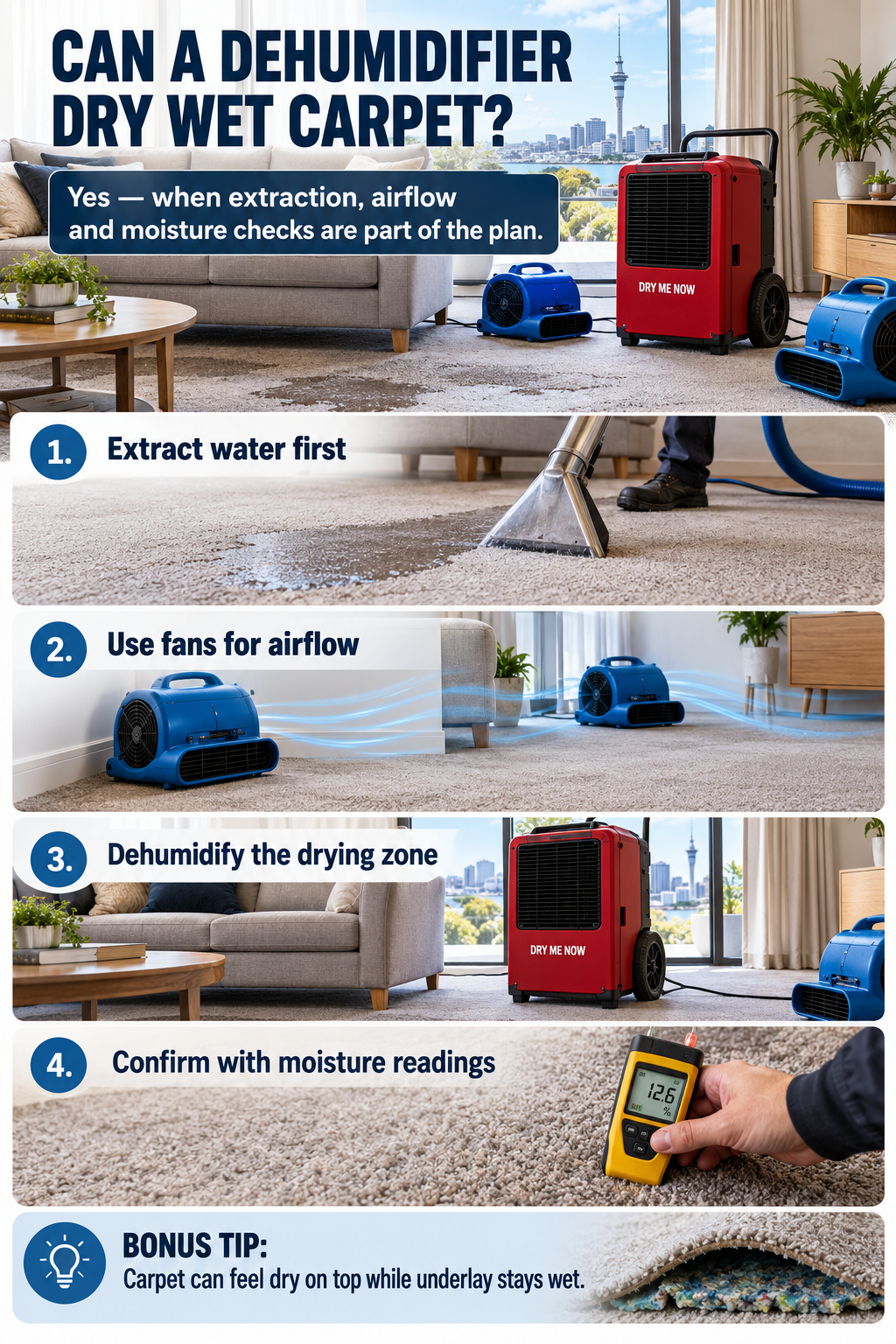
Quick answer: A dehumidifier can help dry wet carpet, but it works best after bulk water has been extracted and when drying fans move air across the carpet, underlay and lower walls. Do not rely on a dehumidifier alone or stop because the surface feels dry—use suitable moisture checks to confirm the affected materials are actually drying.
What a dehumidifier does for wet carpet
A commercial dehumidifier removes water vapour from the air inside a controlled drying area. As drying fans move air across damp carpet, moisture evaporates from the fibres and backing; the dehumidifier then removes that moisture from the air. This gives the carpet and other affected materials a better chance to continue drying rather than simply raising indoor humidity.
That is why fans and a dehumidifier are commonly used together. Fans create directed airflow; the dehumidifier manages the moisture that airflow releases. Neither replaces water extraction when there is still obvious liquid in the carpet or underlay.
What needs to happen before a dehumidifier can help
| Step | Why it matters | Common mistake to avoid |
|---|---|---|
| Stop the source | A continuing leak keeps adding water. | Starting drying equipment before the water source is controlled. |
| Extract bulk water | Removing liquid water is more efficient than waiting for it to evaporate. | Using fans to blow across pooled water without extraction. |
| Set airflow | Air must travel across carpet edges, accessible underlay and lower wall areas. | Aiming fans only at the centre of the room. |
| Dehumidify the zone | Humidity control supports ongoing evaporation. | Leaving doors and windows open without considering outdoor humidity. |
| Check moisture | Carpet can feel dry before materials below it are dry. | Turning equipment off based on touch alone. |
Can a dehumidifier dry carpet without fans?
It may remove some moisture from the air, but drying can be slower and less even without directed airflow. Fans help move air across wet surfaces and around carpet edges, while the dehumidifier removes the vapour that airflow creates. For a small, contained spill the setup may be simple; for water that has travelled under carpet, through multiple rooms or into lower wall linings, it is important to reassess the whole moisture path.
Wet carpet is not just a surface problem
The visible carpet pile can dry ahead of the backing, underlay, skirting or lower wall areas. Water may also travel through doorways and beneath furniture. A drying plan should consider the materials that were actually affected, not just the area that looks wet first.
- Carpet and backing: can hold moisture beyond the visible wet patch.
- Underlay: may trap water below the carpet surface.
- Lower walls and skirting: can take on moisture where water has migrated.
- Adjacent rooms: need checking if water crossed thresholds.
Drying setup checklist
- Keep the dehumidifier intake and exhaust clear of furniture, curtains and stored items.
- Place fans to move air across the wet carpet edge and accessible lower walls, not directly into one small spot.
- Use safe electrical connections and follow the equipment’s operating instructions.
- Manage the drying area so humid outside air is not working against the equipment.
- Check progress and move equipment if humidity or moisture readings show the setup needs adjustment.
- Confirm the finish with moisture readings compared with suitable dry reference areas.
Frequently asked questions
Will a dehumidifier dry a soaked carpet?
It can be part of an effective drying setup after extraction, but a soaked carpet and underlay should not be treated as a dehumidifier-only job. Fans, access to trapped moisture and moisture checks are usually important.
How many fans do I need for wet carpet?
The right number depends on the size and layout of the affected area, how far water has travelled and the materials involved. See our drying-fan quantity and placement guide for practical factors to assess.
How long should a dehumidifier run after water damage?
Run drying equipment until appropriate moisture checks show accessible affected materials have returned to a suitable dry standard, rather than following a fixed timer. Read how long to run a dehumidifier and drying fans after water damage.
When should I get restoration advice?
Get advice if water has crossed rooms, entered wall cavities or framing, involved contaminated water, reached electrical areas, or if measurements are not improving. This water-cylinder leak case study shows why carpet and internal walls may need to be assessed together.
Need drying equipment in Auckland?
Dry Me Now provides commercial dehumidifier hire, drying fans, moisture checks and delivery options for Auckland drying setups. For a larger water event, see our flood-restoration drying service.
Related water-damage resources
For the immediate response, use the first-24-hours leak checklist. For a larger or uncertain job, see Auckland flood restoration. This carpet and wall drying case study shows how a multi-room leak can be assessed and dried.
For equipment setup, see where to place dehumidifiers and drying fans and commercial dehumidifier hire in Auckland.