Finding a soaked couch after a pipe burst or a DIY deep wash can be stressful. In Auckland’s damp climate, moisture trapped in furniture is a recipe for disaster. You need to act fast to save the materials and the structure.
To dry a couch quickly, use high-velocity air movers, a dehumidifier, and keep the temperature around 22°C. Extract excess water immediately with a wet-dry vac. This prevents mould growth and protects the internal timber framing from rot, especially in Auckland’s humid climate.
Upholstery Drying Efficiency by Method
| Method | Est. Drying Time | Risk of Mildew | Best For |
| Natural Air | 24 -> 48 Hours | High | Light Spills |
| Household Fan | 12 -> 24 Hours | Moderate | Small Cushions |
| Industrial Air Mover | 3 -> 6 Hours | Very Low | Deep Washes |
| LGR Dehumidifier | 4 -> 8 Hours | Minimal | Flood/Leaks |
Source: IICRC S500 Standard for Professional Water Damage Restoration
🛋️ The “Golden Hour” of Upholstery Drying
Speed is everything when dealing with wet furniture. The longer water sits in the yarns, the higher the chance of “wicking,” where dirt from deep inside the padding rises to the surface. I’ve seen many Aucklanders try to “wait it out,” only to find brown water stains the next morning.
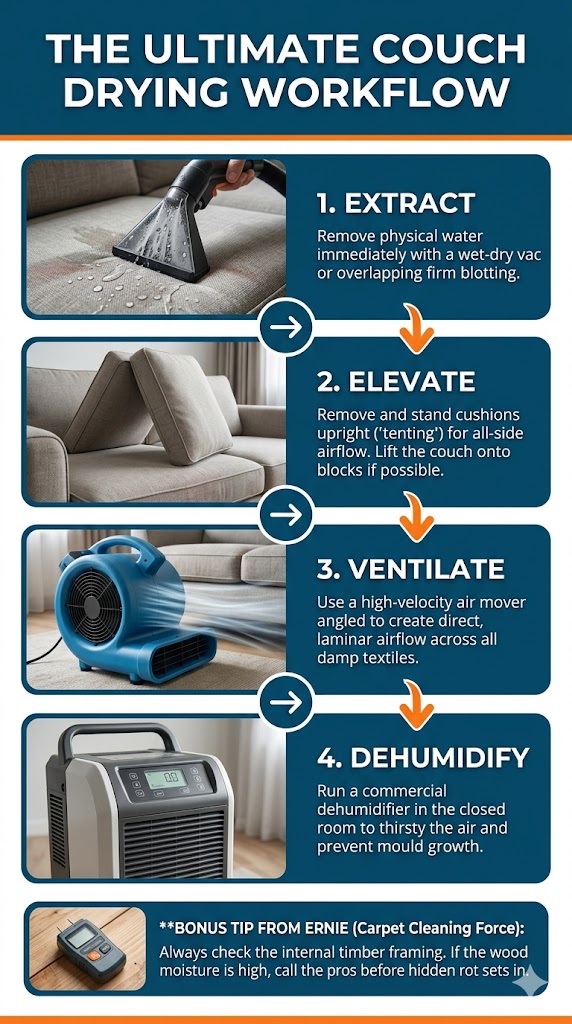
The first step is always physical removal. Use a wet-dry vacuum to pull as much liquid out as possible. Follow this process:
-
Press the vacuum head firmly against the textiles.
-
Work in overlapping strokes -> this ensures no spots are missed.
-
Use clean, white towels to blot any remaining dampness.
From a building science perspective, excessive surface moisture can increase local humidity enough to trigger “secondary damage” on nearby gib-board walls.
🌀 Maximising Airflow and Dehumidification
Airflow is what actually carries the moisture away from the threads. In my years as a carpet cleaning technician, I’ve found that standard pedestal fans just move air around the room without creating the “laminar flow” needed to pull moisture from the padding.
For a fast result, you need to create a wind tunnel effect.
-
Position an air mover at one end of the couch.
-
Point the airflow directly across the dampest textiles.
-
Run a commercial dehumidifier nearby to “thirsty” the air.
-
Keep windows closed if it’s a humid Auckland day -> you don’t want more moisture coming in!
In the world of physics, rapid evaporation can cause significant surface cooling, which may actually slow down the drying process if the room isn’t kept warm.
📐 Strategic Positioning for Quick Results
Gravity can be your friend or your enemy. If your couch has removable cushions, take them off and stand them up in a “tent” shape. This allows air to circulate around all sides of the materials at once.
As a Licensed Building Practitioner, I always check the frame. Most modern couches use MDF or plywood which swells and disintegrates when wet.
-
Lift the couch onto blocks if the carpet is also wet.
-
Ensure air can reach the underside of the base.
-
Rotate cushions every hour -> this ensures even drying across all yarns.
While heat helps drying, extreme temperatures can cause certain synthetic textiles to shrink or “cockle,” damaging the structural integrity of the garment’s fit.
🛠️ When to Stop DIY and Call the Pros
Sometimes a DIY job isn’t enough, especially after a significant leak. If the water came from a “Category 2” source like a dishwasher or washing machine, it contains bacteria that household cleaners can’t kill.
You should call us at Carpet Cleaning Force if:
-
The couch still feels damp after 12 hours.
-
There is a musty or “wet dog” smell.
-
The water originated from a grey or black water source.
-
You see any sign of mould on the underside materials.
In legal and insurance terms, attempting to restore a category 3 water loss yourself can often void your contents insurance policy if professional standards aren’t met.
Real-World Maintenance & FAQs
How do I prevent water marks?
Always dry the entire section, not just the spot. If you only dry a small circle, the minerals in the water will settle at the edge, creating a “tide mark” on the textiles.
Can I use a hairdryer?
No! Hairdryers focus high heat on a small area, which can melt synthetic threads or damage the glue holding the yarns together.
Key Takeaways:
-
Extract First: You can’t blow-dry a puddle.
-
Use the Right Gear: Rent a dehumidifier for large leaks.
-
Airflow is King: Move the air, don’t just heat it.
-
Check the Frame: Don’t forget the timber underneath.
Topic Hub & Further Reading
This article is part of our definitive The Ultimate Guide to Emergency Flood Restoration in Auckland series.
More from this Hub:
- How Long Does It Actually Take to Dry Wet Floor Coverings? -> An Auckland Pro’s Guide
- Drying Wall Cavities and Underfloor Spaces: The Auckland Recovery Guide
- Step-by-Step Guide to Drying Out a Flooded Room After Heavy Rain
Need commercial extraction right away? Visit our Auckland Flood Restoration services page to book immediately.