Gidday, I’m Ernie. I’ve spent years in the Auckland building and restoration industry as an LBP and IICRC technician. If there’s one thing I know, it’s that our winter humidity is a total mission when you’re trying to get a smooth, professional finish on your interior walls.
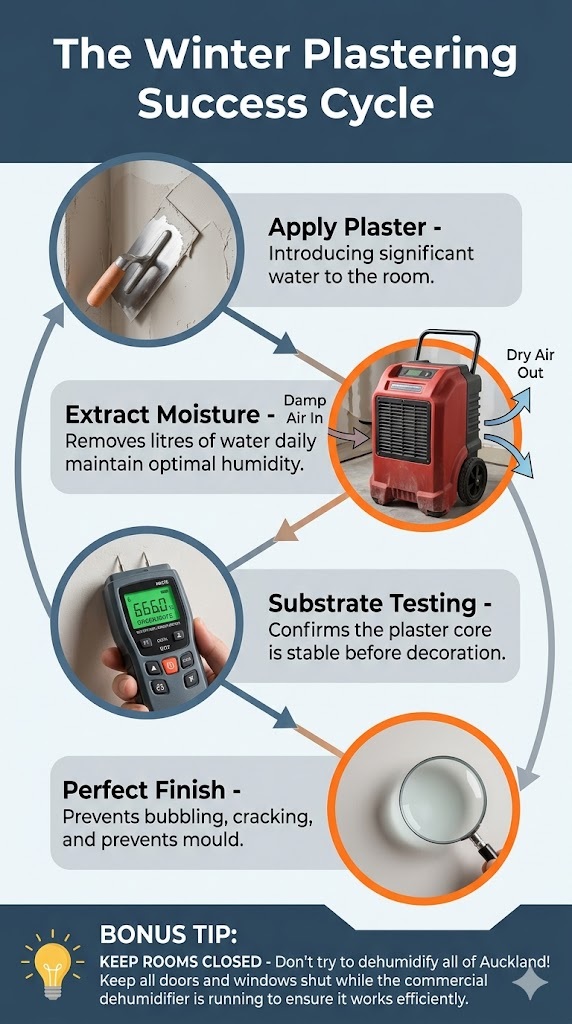
Using a commercial dehumidifier during winter plastering prevents mould growth and structural cracks. By maintaining optimal humidity, these units accelerate drying times in damp Auckland conditions, ensuring a high-quality finish and protecting the integrity of your interior wall materials and paint.
Recommended Drying Environment for Plaster
| Component | Ideal Temperature | Relative Humidity | Est. Drying Time |
| Base Coat | 10°C -> 18°C | 40% -> 50% | 12 -> 24 Hours |
| Finishing Coat | 12°C -> 20°C | 45% -> 55% | 24 -> 48 Hours |
| Undercoat Paint | 15°C+ | Under 60% | 4 -> 8 Hours |
Winstone Wallboards GIB® Site Guide (2014)
🌧️ Why Auckland’s Winter Climate is a Plasterer’s Nightmare
In Auckland, our winter isn’t just cold; it’s incredibly damp. When you apply plaster to your walls, you’re adding litres of water into the room. Without proper airflow, that moisture stays put. It sits on the surface of your wall materials, leading to “sweating” and delayed curing.
I’ve seen plenty of DIY jobs go south because the homeowner thought a heater was enough. Heaters just move the moisture around; they don’t remove it. You need a way to pull that water out of the air before it soaks into your floor textiles or skirting boards.
While high humidity ruins a plaster finish, in the culinary world, it’s actually used to keep pastries from drying out too quickly in the oven.
🏗️ The LBP Perspective: Surface Dry vs. Structurally Sound
As a Licensed Building Practitioner, I’ve been called to “fix-up” jobs in places like Remuera where the plaster looked dry but was soft underneath. If you paint over plaster that hasn’t cured properly, you’re trapping moisture in the wall. This eventually leads to bubbling, cracking, and even structural rot.
In my restoration work, we use moisture meters to check the substrate. A commercial dehumidifier ensures the core of the plaster is stable. It’s about more than just the look; it’s about the longevity of the building. We want those wall materials to stay solid for decades.
In contrast to slow drying for building, some modern 3D printing techniques require instant UV curing to maintain structural integrity.
⚙️ Commercial vs. Domestic: Why Your Small Unit Won’t Cut It
You might have a small dehumidifier from a local department store. While it’s great for a bedroom, it can’t handle a renovation zone. Commercial units move massive volumes of air and can extract up to 80 litres of water a day. That’s a lot of buckets!
These units are also built to handle the dust often found on site. They protect the delicate yarns in your nearby carpets from absorbing excess moisture. Keeping the humidity low prevents that “musty” smell from settling into your home’s soft furnishings during the renovation process.
Interestingly, while we use dehumidifiers to protect building materials, some rare book collectors use them to keep paper from becoming brittle in overly dry environments.
🛠️ Maintenance & Pro-Tips
-
Keep it Closed: Always keep doors and windows shut when the unit is running -> otherwise, you’re trying to dehumidify all of Auckland!
-
Check the Filter: Plaster dust is fine and can clog machines. Check the intake daily.
-
Placement: Place the unit in the centre of the room for the best airflow.
❓ Frequently Asked Questions
Does a dehumidifier make the room cold?
Not usually. Commercial units actually generate a small amount of heat as a byproduct of the refrigeration cycle, which helps the drying process.
How much does it cost to run?
Modern commercial units are surprisingly efficient. It’s much cheaper than paying a pro to sand back and redo a cracked wall because it didn’t dry right the first time.
Key Takeaways
-
Auckland’s winter humidity exceeds 80%, making natural plaster drying nearly impossible.
-
Commercial units extract moisture, whereas heaters only circulate it.
-
Proper drying prevents mould and ensures paint adheres to the wall materials.
-
Hiring a commercial unit protects your carpets and floor textiles from secondary dampness.
Topic Hub & Further Reading
This article is part of our definitive B2B Timber Frame Drying & Moisture Compliance Hub series.
More from this Hub:
- Protecting Building Materials From Moisture Damage on Auckland Construction Sites
- How to Dramatically Speed Up Drying Times for Interior Painting in Auckland
- Preparing Damp Subfloors Before Laying New Hard Flooring in Auckland
Need commercial extraction right away? Visit our Auckland Timber Frame Drying services page to book immediately.