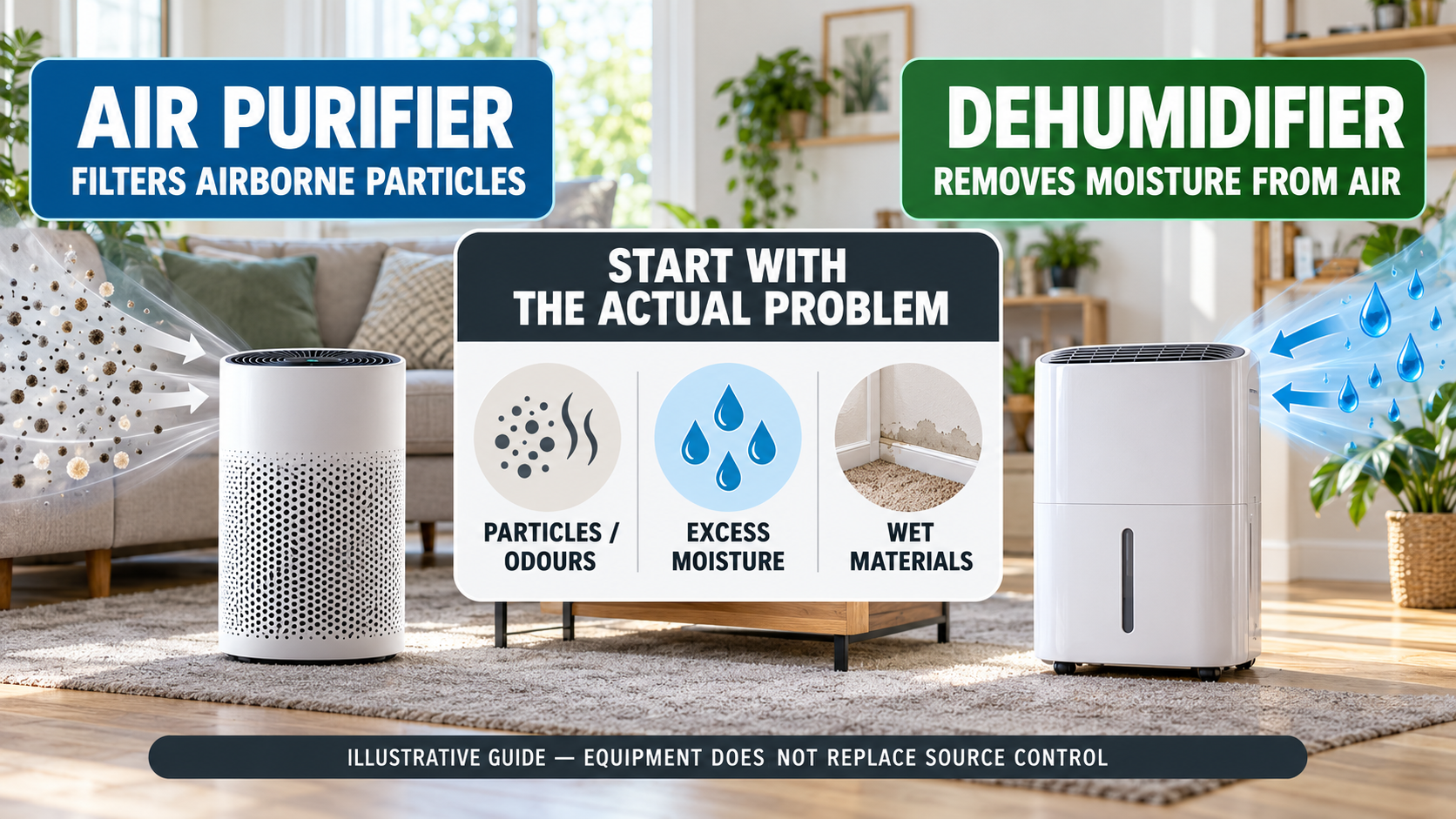
Quick answer: an air purifier is designed to filter airborne particles through its filter system; a dehumidifier removes moisture from room air. Neither one repairs a leak, extracts standing water or proves that wet carpet, wall linings or timber are dry.
Air purifier vs dehumidifier: choose by the problem
| If the main concern is… | What may help | What still needs attention |
|---|---|---|
| Airborne particles or some odours | An air purifier may filter particles according to its filter type and operating instructions. | Cleaning, ventilation and the source of the particles or odour. |
| Excess moisture or condensation | A dehumidifier may help reduce moisture in room air. | Ventilation, heating, insulation, occupancy and indoor moisture sources. |
| Wet carpet or building materials | For a suitable contained event, controlled drying equipment may be part of the response. | Stop the source, remove free water, check materials and escalate unsafe or widespread moisture. |
What an air purifier does—and does not do
An air purifier circulates air through a filter. Its effect depends on the model, filter condition, room size, airflow and the pollutant. It does not remove water from carpet, underlay, wall linings or the air in the way a dehumidifier does. It is not a substitute for addressing a dampness source.
What a dehumidifier does—and does not do
A dehumidifier removes moisture from room air by collecting or draining condensed water, depending on the unit and setup. It can support humidity management or a controlled drying plan, but it does not identify a hidden leak, clean contaminated water or confirm that materials are dry without suitable checks.
Illustrative scenario: musty odour versus a damp carpet edge
Imagine a room has a lingering odour but no visible moisture. Review the likely source, cleaning, ventilation and whether filtered air is relevant before choosing an appliance. If a carpet edge or skirting becomes wet after a leak, treat that as a moisture-scope problem instead: stop the source if safe, keep electricity away from wet areas and assess the materials. This is an illustrative scenario, not a Dry Me Now job record or a promised result.
When equipment is not the complete answer
Seek appropriate advice where water is contaminated, electrical areas are affected, dampness persists, visible materials are deteriorating, or moisture may have reached concealed construction. Source control and material assessment come before any appliance choice.
Frequently asked questions
Can an air purifier remove humidity?
No. An air purifier is not designed to remove moisture from air. Choose a dehumidifier where the verified problem is excess humidity, while addressing the source of that moisture.
Can a dehumidifier remove dust or filter the air?
A dehumidifier’s main role is moisture removal, not air filtration. It is not a replacement for a purifier where airborne particles are the concern.
Can either appliance fix a musty smell?
Not on its own. A persistent smell can have several causes, including damp materials or a leak. Identify and address the source rather than masking it with equipment.
Can a dehumidifier help dry wet carpet?
It can support a drying plan by removing moisture from room air, normally with suitable airflow and extraction. The water source, spread and material condition guide whether further assessment is needed.
Related Auckland guides
- Humidifier vs dehumidifier: choosing by room conditions
- How a dehumidifier supports a drying setup
- Equipment hire or professional restoration?
For a suitable Auckland dehumidifier and drying-fan hire discussion, visit Dry Me Now.