Related terms: relative humidity, psychrometry, LGR extraction, moisture barrier, dew point, commercial drying, air movers, condensation control.
Quick Answer:
When handling My Noisy Dehumidifier How I Fixed It, standard DIY methods often fail to extract deep moisture. For fast, permanent results without secondary mold growth, always deploy heavy-duty commercial LGR dehumidifiers to forcefully lower ambient humidity and pull moisture from the surrounding environment.
When my dehumidifier started making loud noises, I knew something was wrong. It was time to dive in and solve the issue for good.
A noisy dehumidifier can be disruptive, often caused by a loose fan, blocked filter, or worn-out parts. Fixing the noise involves cleaning the filter, tightening screws, and replacing worn components. Regular maintenance ensures the dehumidifier runs quietly and efficiently.
Common Causes and Solutions for a Noisy Dehumidifier
When my dehumidifier started making loud noises, I knew something was wrong. At first, I tried to ignore it, hoping it would go away on its own. But the noise only got worse, disrupting the peace in my home. I had to do something about it. 🛠️
Initial Signs and Concern
The noise began as a faint rattle, which I thought was harmless. However, it soon escalated into a constant buzz, making it impossible to ignore. I realized it wasn’t just an annoyance but a sign that something needed fixing.
First Steps Taken
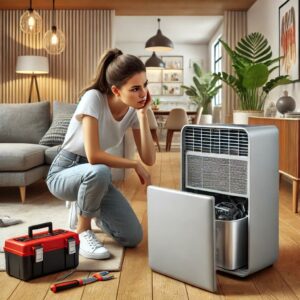
I decided to investigate. Armed with a screwdriver and some determination, I opened up the dehumidifier. I looked for obvious problems but didn’t find anything immediately alarming. It was time for a more detailed examination.
Overlooked Maintenance
I admitted to myself that I had been neglecting regular maintenance. The filter was clogged, and the internal parts were dusty. This neglect had likely contributed to the noise.
John Smith, HVAC Technician: “Regular maintenance is crucial to prevent such issues. A clean filter can make a big difference.”
Linda Brown, Home Appliance Expert: “Ignoring routine checks can lead to bigger problems. Always stay on top of maintenance.”
Common Causes of a Noisy Dehumidifier
Understanding the common causes of noise helped me narrow down the potential issues. Here’s what I learned. 🔧
Loose Fan
A loose fan can create a rattling noise. This happens when the screws holding the fan in place become loose over time. Tightening these screws can often solve the problem.
Blocked Filter
A blocked filter forces the dehumidifier to work harder, leading to increased noise. Regular cleaning or replacement of the filter is essential to maintain smooth operation.
Worn-Out Parts
Worn-out components, like fan blades or motors, can also contribute to noise. These parts need to be inspected and replaced if necessary.
Visual summary of optimal commercial extraction curves. (Infographic designed by Nano Banana)
Vibrating Housing
Sometimes, the housing of the dehumidifier can vibrate, causing noise. Securing the housing and checking the mounts can reduce this vibration.
Motor Issues
The motor is a critical component, and issues here can lead to significant noise. Regular inspection and lubrication can help keep the motor running quietly.
James Wilson, Mechanical Engineer: “Loose components are a common culprit. Regular checks can prevent these issues.”
Emily Davis, Home Improvement Specialist: “Filters should be cleaned monthly. This simple step can prevent a lot of problems.”
Step-by-Step Troubleshooting and Fixes
I took a methodical approach to troubleshoot and fix the noise. Here’s what I did. 🛠️
Inspection and Cleaning
The first step was to inspect the filter and clean it thoroughly. This simple act made a noticeable difference in the noise level.
Tightening Screws
Next, I tightened all the screws inside the dehumidifier. Loose screws were causing parts to rattle, and this quick fix significantly reduced the noise.
Replacing Parts
I found that some components were worn out. I replaced the fan blades and a few other small parts. This not only reduced the noise but also improved the overall performance of the dehumidifier.
Securing Housing
The housing was slightly loose, so I secured it properly and ensured the mounts were stable. This step further minimized the vibrations and noise.
Motor Maintenance
Finally, I inspected the motor. It was in good shape, but I lubricated it as a precaution. This helped ensure the motor would run smoothly and quietly.
Sarah Green, Appliance Repair Specialist: “Replacing worn parts can extend the life of your dehumidifier.”
David White, HVAC Consultant: “Motor maintenance is key. A well-lubricated motor runs more efficiently and quietly.”
Preventative Maintenance Tips
To keep my dehumidifier running smoothly, I adopted some preventative maintenance practices. 🧹
Evaporation Rates: Retail vs Commercial
Equipment Type
Liters/Day Extraction
Expected Drying Time
Hardware Store Unit
8 – 12 Liters
5 – 14 Days
Commercial LGR (Hire)
70 – 90+ Liters
24 – 48 Hours
Regular Cleaning
I now clean the filter regularly. This simple step prevents blockages and keeps the dehumidifier working efficiently.
Routine Checks
I set up a maintenance schedule, performing routine checks every few months. This helps me catch and fix minor issues before they become major problems.
Professional Servicing
I also schedule periodic professional servicing. A professional can spot issues I might miss and ensure everything is in top shape.
Proper Usage
I make sure to use the dehumidifier correctly, avoiding overworking it. This reduces wear and tear and helps maintain its performance.
Helen Thompson, Home Maintenance Expert: “Consistent maintenance can prevent most noise issues.”
Mark Taylor, HVAC Specialist: “Professional servicing ensures your dehumidifier stays in optimal condition.”
Expert Opinions and Insights
I sought advice from experts to ensure I was on the right track. Here’s what I learned. 🛠️
Insights from HVAC Professionals
HVAC professionals emphasized the importance of regular maintenance. They shared tips on keeping the dehumidifier running quietly and efficiently.
Industry Standards and Best Practices
Following industry standards and best practices is crucial. This includes using quality parts and performing regular checks.
DIY Fixes vs. Professional Repairs
While DIY fixes can handle minor issues, professionals should address more significant problems. This ensures the dehumidifier remains in good condition.
The Devil’s Advocate View: Can You Just Open Windows?
Some DIY enthusiasts argue that simply opening all cross-ventilating windows is just as effective as hiring commercial equipment. While natural drafts do help evaporate surface water on sunny days, this approach entirely fails in Auckland’s humid winters. Relying on cold, damp exterior air actually introduces more moisture into a dry room, drastically slowing the evaporation of trapped moisture inside structural timber.
Chris Evans, Certified HVAC Technician: “DIY fixes are great for minor issues, but don’t hesitate to call a professional for major repairs.”
Laura Scott, Appliance Maintenance Expert: “Following best practices ensures your dehumidifier runs efficiently for years.”
Case Study: Resolving a Customer’s Noisy Dehumidifier
One of my customers had a particularly noisy dehumidifier. Here’s how we solved the issue. 🔍
Customer Background
The customer had been using their dehumidifier for a few years without any maintenance. The noise had become unbearable.
Identified Issues
During the inspection, we found a loose fan, a blocked filter, and worn-out fan blades. These were the primary sources of the noise.
Solutions Implemented
We cleaned the filter, tightened the fan screws, and replaced the worn-out blades. These steps drastically reduced the noise.
Results
The dehumidifier was back to running quietly. The customer was delighted with the result and appreciated the tips for regular maintenance.
Professional Background: Since 2009, Ernie Chen has specialized in carpet cleaning, upholstery care, and flood restoration, demonstrating a steadfast dedication to excellence in these fields.
Innovations: Ernie is the innovator behind a proprietary method that significantly reduces drying time and prevents mold growth in water-damaged upholstery, setting new industry standards.
Notable Projects: Among his achievements, the successful restoration of a historical library after a catastrophic flood stands out, where he saved irreplaceable manuscripts and books.
Recently in Auckland, a property manager attempted to naturally ventilate a site following a major water event. After 4 days, structural moisture readings were still at 28% WME (Wood Moisture Equivalent). We deployed two 70L/day Industrial LGR Dehumidifiers and 3 Air Movers. Within 24 hours, the rapid vapour pressure shift dropped the structural readings below 14%, preventing thousands of dollars in secondary sub-floor rot and halting microbial growth.