What does thermal imaging show after water damage? It can show surface-temperature patterns that help identify areas needing closer moisture checks. It does not prove a material is wet or dry, identify the leak source, or replace repeat readings. First stop the source; then use airflow, dehumidification and comparable readings for a suitable clean-water drying job.
After water damage, a thermal-image check can support a targeted moisture inspection to compare affected areas before and after drying. It does not certify a building or material as dry.
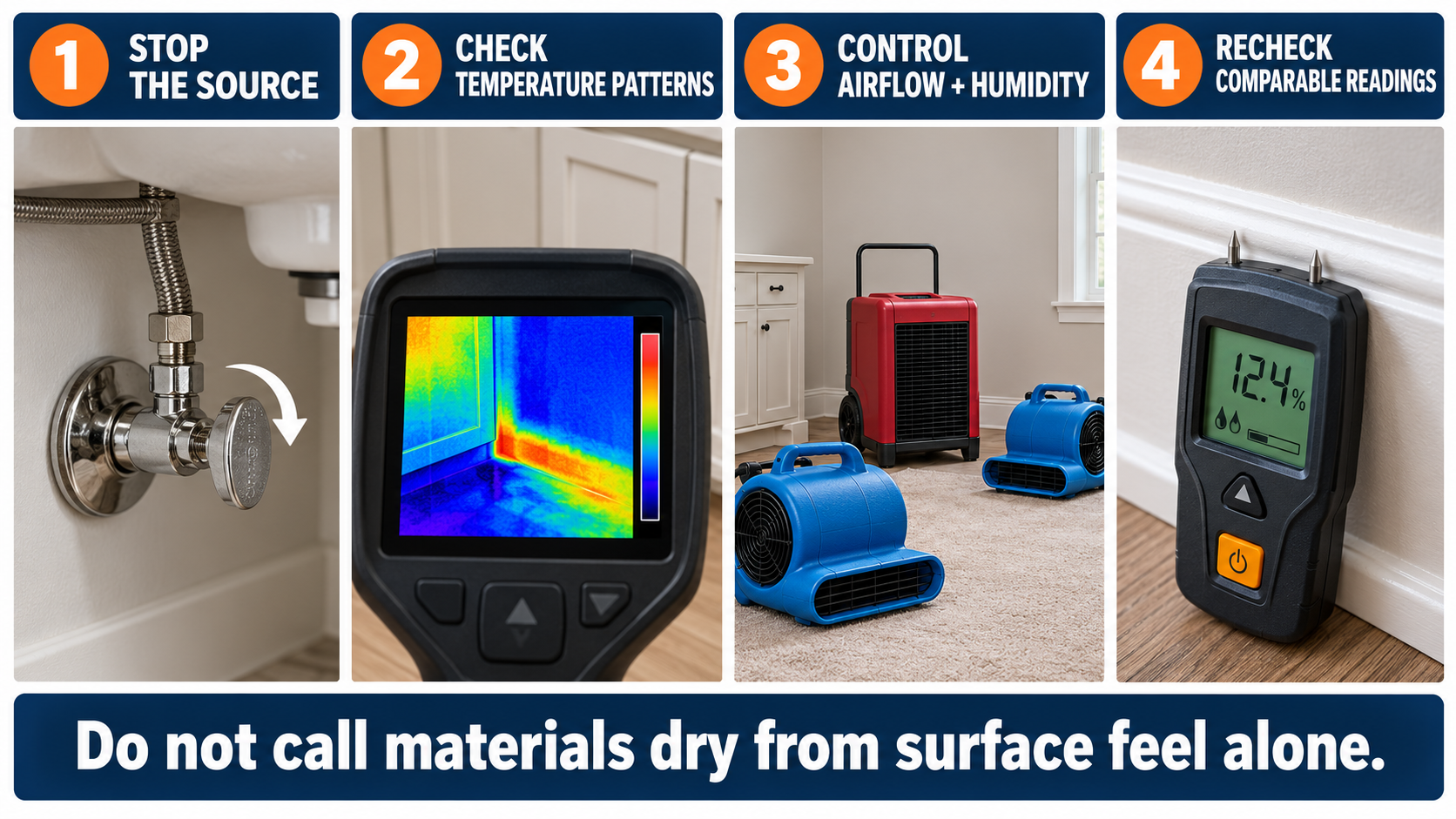
Case study: kitchen leak above a garage
A dishwasher-installation plumbing pipe burst, allowing clean water to travel from the kitchen floor into the garage below. After the plumbing repair, one dehumidifier and two Filta Air Max drying fans were used in each zone because the upstairs timber floor and garage below had different materials and airflow conditions. Thermal imaging and moisture readings were used as comparison checks during the drying plan; they did not identify the original leak source or certify the building as dry.
The practical order after a clean-water leak
| Step | Why it matters |
|---|---|
| Stop the source | Drying cannot solve an active plumbing leak. |
| Check the affected path | Thermal patterns can help identify where to make closer moisture checks. |
| Control airflow and humidity | Air movers move air across damp materials; a dehumidifier removes moisture from room air. |
| Recheck comparable readings | Surface feel alone does not confirm carpet, walls or timber are dry. |
What thermal imaging can and cannot show after water damage
A thermal image can help locate a cooler or warmer area at a cabinet, lower wall, ceiling or floor junction. That pattern might be affected by dampness, air movement, insulation, materials or room conditions. Use it as a guide for closer inspection, not as proof of moisture or a leak.
When not to rely on hire equipment alone
Use professional assessment rather than equipment hire where water is contaminated, electricity may be unsafe, the leak remains active, the source is unknown, or water may have travelled through cavities or multiple rooms.
Related guidance: hidden water leak signs, thermal imaging for building inspections, thermal imaging and moisture testing for suspected leaks, and Auckland flood restoration.
Frequently asked questions
Can thermal imaging tell if a wall is dry?
No. It shows temperature differences. Use appropriate comparable moisture readings and the full drying context.
Do I need air movers and a dehumidifier together?
For many suitable drying jobs, yes. Air movers support evaporation while a dehumidifier helps control humidity in the room.
Can I use equipment before the leak is fixed?
No. Resolve an active or unknown source first with a qualified plumber or leak-detection specialist.