What are the signs of a leak under a floor or slab? Possible signs include unexplained meter movement, warm or damp floor patches, persistent musty odours, damp edges near a wall, or an unexplained increase in water use. These signs do not locate the fault; a qualified plumber or leak-detection specialist should investigate the source.
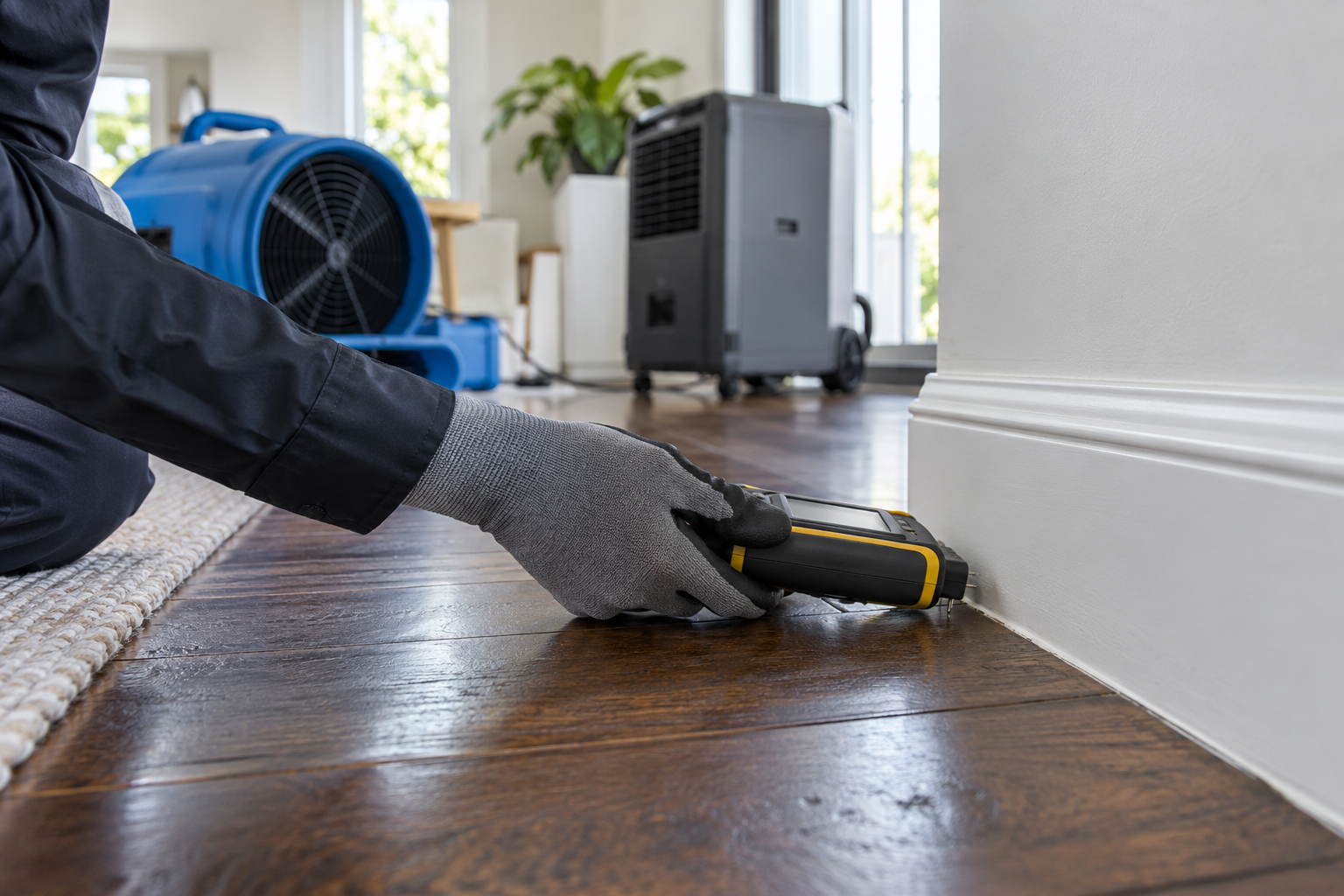
Common signs that warrant investigation
- Your water meter changes during a no-use test.
- A floor area feels unusually warm, cool or damp compared with nearby areas.
- There is recurring dampness along skirting, carpet edges or a slab junction.
- You can hear water movement when no fixture is running.
- Water use or bills rise without another clear explanation.
What each professional does
| Need | Appropriate next step |
|---|---|
| Locate and repair active pipework fault | Qualified plumber or leak-detection specialist |
| Assess accessible damp materials after a known event | Moisture comparisons; thermal imaging may guide where to check |
| Dry a suitable contained clean-water area after repair | Fans and dehumidifier with monitored drying |
| Assess structural, roof or cladding concerns | Independent qualified building professional |
Illustrative scenario: a damp carpet edge beside a garage slab
Illustrative scenario, not a customer result. A household notices a recurring damp carpet edge near a garage wall. A water-meter test indicates possible ongoing water use, so a plumber investigates before any drying equipment is considered. Once the source is repaired, accessible materials can be compared for drying needs.

Why drying is not the first step
A dehumidifier and fans can help dry suitable materials after repair, but they cannot locate or fix a concealed pipe fault. Running drying equipment while water is still entering may delay the right repair and make it harder to judge progress.
First use the water-meter test, then see how Drying Combo moisture checks work and the first-24-hours water-leak checklist.
Frequently asked questions
Can thermal imaging find a slab leak?
It may reveal temperature patterns in some conditions, but it cannot confirm every slab-leak source. A qualified plumber or leak-detection specialist should locate and repair the fault.
Can a moisture meter see through concrete?
No. Meter results depend on the device, material and accessible test area. They are useful for comparisons, not for seeing through a slab.
When can I use a dehumidifier and fans?
After the leak source is fixed and the situation is suitable for managed clean-water drying. The right setup depends on materials, humidity, airflow and moisture comparisons.