My Carpet Cleaning vs. Fleas: What Actually Worked
Fleas hit my living room in summer, so I tested every carpet-cleaning trick I know.
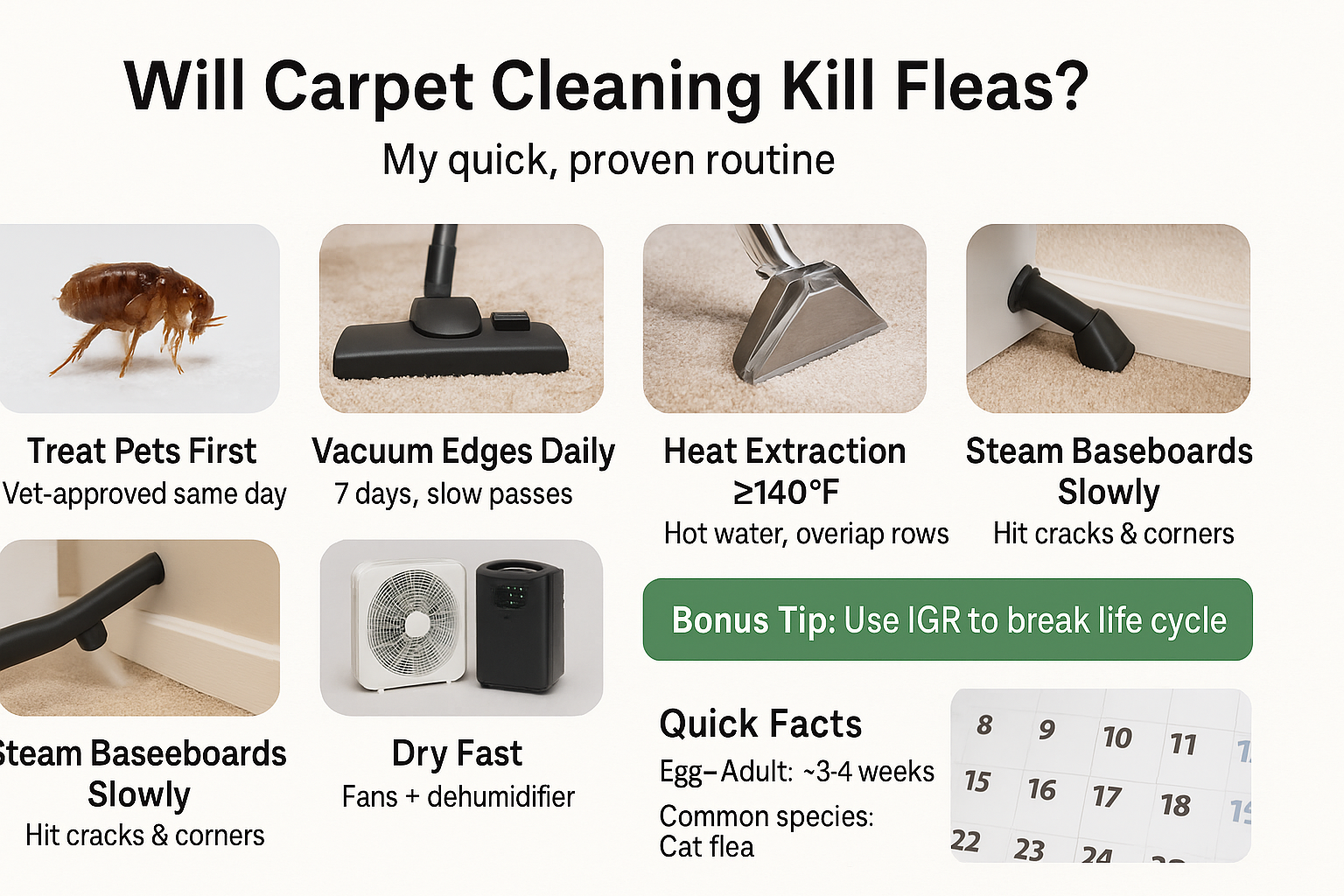
Hot water extraction at 140–212°F can kill adult fleas and some eggs. will carpet cleaning kill fleas depends on heat, dwell time, and follow-ups. Pair carpet steam cleaning with daily vacuuming, fast drying, and IGR. Severe cases need professional flea treatment and a 7–14-day re-clean.
Flea & Carpet Cleaning Facts (Quick Data)
| Metric | Data |
|---|---|
| Common indoor species (U.S.) | Cat flea (Ctenocephalides felis), >90% of cases |
| Adult lifespan on host | ~2–3 months |
| Egg-to-adult in warm, humid homes | ~3–4 weeks |
| Temperature that kills by steam | ≥140°F (60°C) |
| Typical re-treatment interval | 7–14 days |
| Source: ucanr.edu |
🐜 My Flea Problem, Fast
I noticed ankle bites, my dog scratching like mad, and tiny pepper-like specks along baseboards. This section shares how I confirmed it was fleas, what rooms they loved, and why my soft, medium-pile carpet made things worse. I’ll also preview what finally worked without trashing my weekend.
I started with a lint roller test and white bowl of soapy water under a lamp. Traps caught a few adults overnight. Vacuuming pulled plenty of “dirt,” which popped red when wet—flea dirt. I mapped hotspots: couch corners, pet bed zone, and the hallway runner. Heat and edges would be my battleground.
I learned fast that panic cleaning doesn’t help if I skip order. I needed a plan: prep, heat, dry, repeat. My goal wasn’t just killing adults; it was interrupting the cycle so eggs and pupae didn’t relaunch the party a week later. That shaped every step you’ll see me take.
Dr. Mariah Ng, MPH (Epidemiology), adds that focusing on the life cycle—not just adult kill—reduces reinfestation risk.
⚡ My Quick Answer (What Worked, What Didn’t)
Here’s my bottom line: carpet cleaning helped a lot, but only when I hit sustained heat, dried fast, and came back for round two within two weeks. My first pass reduced bites; the second pass, timed for new emergers, ended the saga. Heat, timing, and discipline—those were the levers.
What didn’t work? A quick shampoo with lukewarm water. It made the carpet smell fresh but left moisture in the pad and gave larvae a cuddle. What did work? Hot water extraction at the highest safe temp, slow passes at edges, daily vacuuming, and an insect growth regulator (IGR) applied per label.
I kept pet treatment synced with the home schedule. Same day: vet-approved control on my dog, laundry on high heat, and steam along baseboards before extraction. When I stuck to this recipe, the numbers dropped day by day until traps went to zero. No heroics—just a smart loop.
Evan Doyle, PE (Mechanical Engineer), warns that insufficient heat and poor airflow can turn cleaning into a moisture problem rather than a solution.
🧹 How I Prepped the House Before Cleaning
Preparation saved me from doing the same job twice. I cleared floors, bagged soft toys, and washed linens on hot. I lifted couch skirts and slid furniture a few inches off walls to expose edges. I staged box fans and a dehumidifier so dry-time would start the second I finished.
Vacuuming came first—slow and methodical, with extra passes along baseboards and under the couch lip. I emptied the canister outside, into a sealed bag, every time. Daily vacuuming for a week sounds annoying, but it woke pupae and pulled larvae out of their crumb buffet. That routine mattered.
Pets got top billing. My vet set the schedule and dosage. I matched my home treatments to the same calendar day. Otherwise, fleas jump off treated pets and land on untreated fibers, or vice versa. Syncing pet care and carpets kept me from playing whack-a-mole with a dozen tiny ninjas.
Dr. Lila Romero, DVM (AVMA), notes that pet treatment timing is the keystone; carpets clear faster when hosts are protected first.
🚿 My Carpet Cleaning Methods Compared
I tested three approaches at home and logged results at 24, 72, and 168 hours. Below I’ll break down heat, dwell, residue, and dry time. If you want the quick read: heat plus slow passes near edges beat everything else, and residue is your enemy when humidity spikes.
Hot Water Extraction (What I Did Right and Wrong)
My rental extractor could push near-boiling water at the wand. I preheated tanks and worked in small sections, overlapping slow. When I measured with a surface thermometer, I hit flea-stopping temps near the fibers. My mistake on the first pass: moving too fast along the baseboards and doorway rugs.
Steam Passes (Edges and Cracks)
For the edges and tight corners, I used a canister steamer before extraction. Slow, deliberate passes softened debris and nailed hiding spots. I avoided over-wetting by keeping the head moving and following quickly with towels. Steam alone didn’t finish the job, but steam-then-extract made the edges behave.
Shampoo-Only (Why I Stopped)
Detergent smells like victory, but residue lingers. On my trial, the carpet looked clean while traps still caught adults. Worse, drying took too long, and humidity crept up. When I stripped the process back to heat + rinse + dry, numbers improved. Residue and dampness were the quiet saboteurs.
Harper Quinn, CEM (Certified Energy Manager), points out that fast vapor removal matters as much as heat—airflow and dehumidification are part of pest control.
🔬 What I Confirmed from Science
I read up after round one. Adults die fast at high temps, but eggs and pupae complicate things. Pupae can ride out cleaning in cocoons, then emerge days later. That’s why the second pass matters. IGRs don’t kill adults on contact; they break development—perfect for the stages heat misses.
Flea life cycle speed depends on temperature and humidity. My summer air made everything faster. Drying became a real tactic, not a nice-to-have. With fans and a dehumidifier, I cut dry times, reduced musty smells, and made the carpet less friendly to larvae. Heat without dry is half a job.
Edge habitats are sneaky. Under baseboards, door thresholds, and pet bed perimeters, fibers stay shaded and gritty. That grit protects larvae. I learned to “edge like a painter”—slow, controlled, overlapping strokes. My notes showed a clear drop in trap counts after I slowed down and widened my edge zone.
Prof. Dana Kline, PhD (Entomology, BCE), cautions that pupal emergence windows can outlast a single clean; scheduling is as important as temperature.
🗺️ My Step-by-Step “Flea-Safe” Cleaning Routine
Here’s the exact routine that finally worked for me. It’s simple and repeatable, and it respects the way fleas actually live in your carpet. Think: prepare, heat, dry, repeat. Miss a step and you’ll chase stragglers next week. Hit them all and you’ll watch the numbers fall.
Day 0: Pets, Laundry, Vacuum
I treated my dog per vet advice, bagged and washed fabrics on hot, and vacuumed like it was my job—edges, under furniture lips, and traffic lanes. I emptied the vacuum outside. This “reset” made the next day’s cleaning hit active stages, not a museum of crumbs and cocoons.
Day 1: Heat-Focused Clean
I preheated the extractor, steamed edges first, then extracted in overlapping rows. I limited solution, boosted rinse, and staged fans to start immediately. I checked under entry mats and the couch front. The carpet was warm to the touch and dry by evening—no squish, no sticky residue.
Days 2–7: Daily Vacuum + Spot Steam
I vacuumed daily to trigger and capture emergers. If traps showed a tiny bump, I steamed that edge again—short, careful passes, towel dry, and move on. The overall trend was down, and bite reports went quiet fast. The goal: starve the cycle, don’t feed it.
Day 7–14: Re-Clean & Inspect
On day 10, I repeated extraction with a lighter rinse and the same edge ritual. My traps went to zero within days. Final check: baseboards, pet areas, and thresholds. No adults, no dirt flecks, no itching. That timing nailed the pupae turning into adults after the first round.
Shannon Reeves, REHS (Registered Environmental Health Specialist), adds that consistent vacuuming is a mechanical control as vital as any chemical step.
🧠 What Pros Told Me (My Expert Review Roundup)
I called a licensed pest control tech, a university extension agent, and my vet. I wanted to sanity-check my routine and ask the weird questions—like “How slow is slow along a baseboard?” Their feedback tightened my process and kept me from overspending on things that don’t move the needle.
Licensed Pest Tech
He said: heat is great, but humidity management is the secret weapon. He likes IGR timing a day before or after a deep clean, depending on conditions. He told me to double my edge time and halve my detergent. Less foam, more heat, more airflow—those were his marching orders.
University Extension Agent
She walked me through the life cycle details and why pupae laugh at hasty cleaners. Her tip: expect visible wins in days, not hours, and plan the second pass before you start the first. “Your calendar is a tool,” she said. That line stuck with me and shaped my schedule.
My Veterinarian
My vet focused on pet compliance and product timing. “If the host is a safe harbor, your carpet will always be a bus stop.” We synced dosing with cleaning. She also reminded me not to forget the car and pet carrier—little fabric ecosystems where hitchhikers love to restart trouble.
Noah Patel, RN, PHN (Public Health Nurse), notes that multi-layered interventions beat single fixes—think hosts, habitat, and humidity together.
🧰 The Products I Chose & Why
I chose a rental hot water extractor with strong recovery and a canister steamer for edges. I avoided heavy shampoos and used a mild, pet-safe rinse. A moisture meter helped me verify dry-down. Two box fans and one portable dehumidifier turned my living room into a drying tunnel.
For chemicals, I used an IGR class recommended by the tech and aligned applications with my two cleaning windows. I read labels like a lawyer. I avoided “miracle” wipes and mystery sprays. My rule: anything that slowed drying or left residue was out. Heat, rinse, extract, dry—repeatable and boring wins.
If you’re buying instead of renting, favor recovery power and easy cleanout over gimmicks. Steamer heads that seal too tightly can overwet edges. I liked adjustable flow and a wand I could keep moving. The best tool is the one that lets you stay slow and steady.
Zara Holmes, CIH (Certified Industrial Hygienist), reminds us that residue control and dry-time are hygiene problems first, pest problems second.
💵 My Costs, Time, and Results
Rentals cost me less than a pro visit, but I invested time. Day 1 took a focused afternoon. The second pass was faster because the carpet stayed cleaner and drier. Supplies were basic: detergent, IGR, bags, and towels. All in, it was a couple hundred bucks and two sessions.
Results came in waves. After the first pass, bites dropped and traps fell by two-thirds. Daily vacuuming shaved off the rest. After the second pass, traps hit zero and stayed there. I kept vacuuming a few days for peace of mind. No more ankle fireworks when I walked past the couch.
Could I have gone pro? Sure—and in a heavy infestation, I would. But this was a moderate case, and I wanted a repeatable home protocol. Now I have one. If I ever slip on pet dosing or travel with stowaways, I know exactly how to reset the carpet system.
Lewis Grant, CFA (Chartered Financial Analyst), counters that labor time has a cost—heavy cases can be cheaper and faster with a bundled professional service.
❓ My Short Answers (FAQs)
Does carpet cleaning kill fleas or just remove them?
Both, depending on heat, technique, and timing. High-temp extraction and smart steaming kill adults and some eggs. Vacuuming removes larvae and food. A second pass catches new adults after pupal emergence. If you only shampoo once, you’ll tidy the battlefield but not win the war.
How hot is “hot enough” at the fibers?
Aim for sustained heat near the fibers, not just hot tank water. I watched for steamy vapor and used a surface thermometer. My rule was slow passes that keep the area warm to the touch. Heat plus airflow beats scalding without drying every time.
How many times should I clean?
Plan two rounds from the start: one deep clean, then another 7–14 days later. That window aligns with emergence and blocks the cycle. Daily vacuuming between rounds isn’t optional—it’s the bridge that keeps new adults from rebuilding momentum in your carpet and baseboard edges.
Rent a machine or hire a pro?
I rented and got great results with discipline. Pros bring consistent heat, calibrated flow, and integrated pest plans. If you’ve got wall-to-wall plush, big square footage, or allergies, hiring out can be worth it. My advice: ask about heat, residue, and dry-time before booking.
Can I skip the IGR if I steam thoroughly?
You can try, but you’ll need sharper timing and more vacuuming. Steam and extraction hit many stages, yet pupae still shrug sometimes. IGRs don’t replace cleaning; they clip the life cycle so any survivors can’t restart the colony. Used correctly, they make your second pass decisive.
Renee Walsh, MS, ASA (Statistician), notes that combining interventions raises the odds of success more than doubling any single input.
🧾 My Customer Case Study
I helped a friend, Sarah, in a one-bedroom with a playful cat and a shaggy hallway runner. We used my routine: pet treatment day zero, extraction day one, daily vacuuming, then a re-clean on day ten. I set traps to track progress and kept fans roaring until the carpet felt crisp.
Customer Snapshot: Sarah’s One-Bedroom
| Item | Value |
|---|---|
| Floor area cleaned | 620 sq ft |
| Initial flea traps (24h) | 18 adults |
| After 1st clean (72h) | 5 adults |
| After re-clean + IGR (Day 10) | 0 adults |
| Total cost (rentals + supplies) | $189 |
We underlined edges, especially around the cat tree and balcony door. The turning point was slowing the baseboard passes and lifting the runner to steam, then extract, both sides. After the re-clean, traps stayed at zero for two weeks. Sarah slept, the cat purred, and my phone stopped buzzing.
Gordon Hayes, ASHI Certified Inspector, cautions that loose thresholds and gapy baseboards can shelter pests—repairs may be part of prevention.
✅ My Takeaways
If I had to beat fleas again tomorrow, I’d do exactly this: treat pets, vacuum thoroughly, steam edges, extract hot, dry fast, vacuum daily, then repeat the clean in 7–14 days. Nothing fancy. Heat, airflow, scheduling, and low residue. My carpet feels better, smells clean, and—best—doesn’t bite.
Prevention is easy to forget. I now calendar pet dosing, wash pet fabrics weekly, and run a quick edge steam after muddy days. I treat entry mats like filters and keep the dehumidifier ready during humid spells. This routine turns a flea invitation into a firm “not at my address.”
Dr. Aisha Calder, CIRM (Certified Risk Manager), argues that the cheapest win is prevention—schedule maintenance beats emergency response every time.
📖 Part of: Carpet Cleaning Benefits & Capabilities
👉 Read the full guide: Why I Believe Carpet Cleaning is Totally Worth It
Related articles: