I learned the hard way that fleas don’t care how “clean” a house looks — they care about warmth, hiding spots, and whether you stop too early.
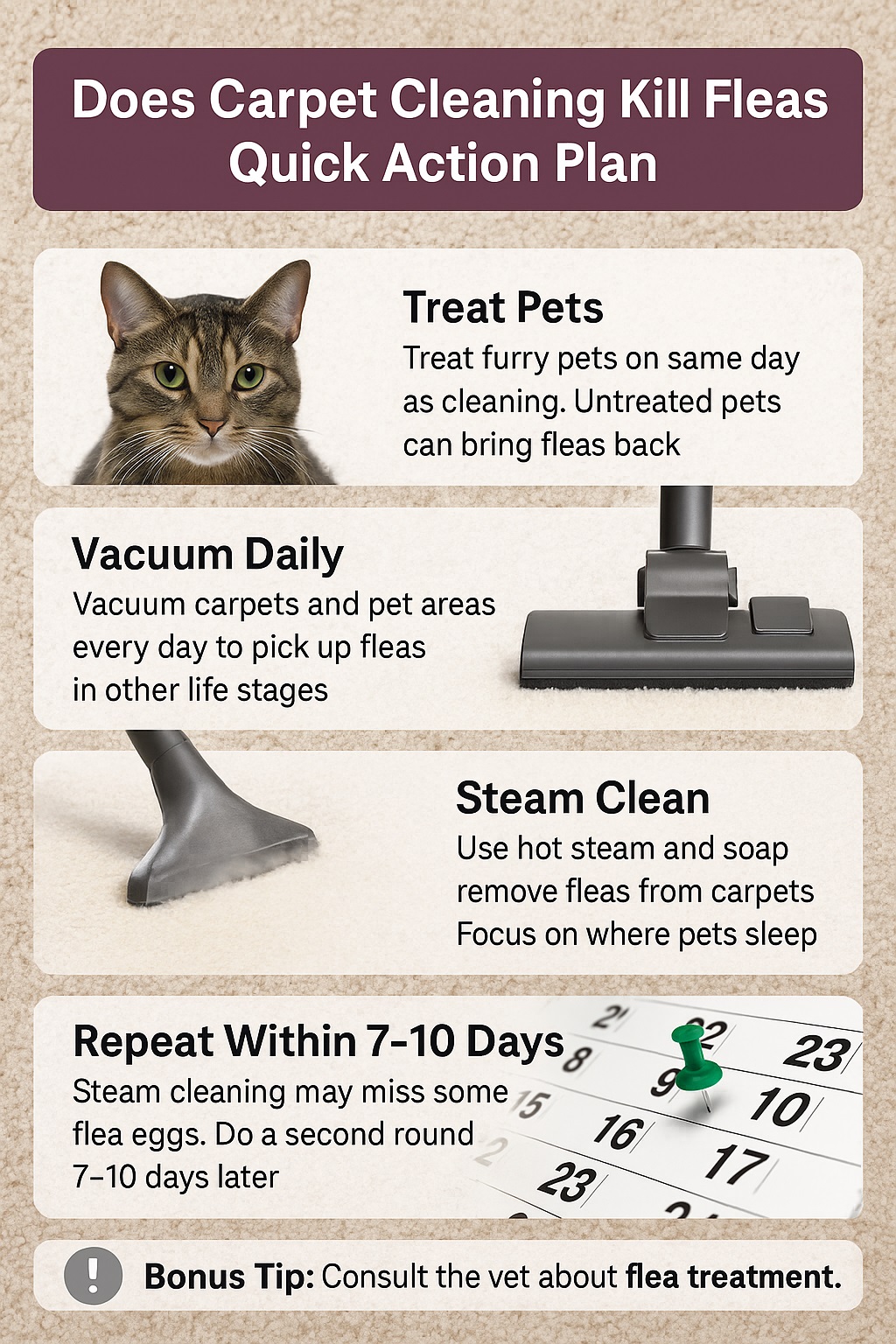
Hot-water extraction and steam cleaning can kill many fleas in carpet by combining heat, moisture, and detergent. But flea eggs and pupae can survive in deeper areas and reappear. Pair hot-water extraction with vacuuming and a follow-up in 7–10 days for best results, especially where pets sleep.
My Flea + Carpet Cleaning Quick Stats
| Data point | What it means in plain English |
|---|---|
| Fleas have 4 life stages | Adults are the easy part; the other stages hide |
| Eggs can hatch fast | You can clean today and still see fleas soon |
| Pupae can “wait” | They can sit tight until vibration wakes them |
| Daily vacuuming helps | It physically pulls stages out of carpet fibers |
| Follow-ups matter | One clean often isn’t the finish line |
Source: epa.gov
Table of Contents
🐾 My Quick Answer (So You Don’t Waste a Week Scratching)
The honest answer is: carpet cleaning can kill fleas in the carpet, but it rarely finishes the job by itself. The first time I dealt with fleas, I cleaned once, felt proud, and then got humbled when the bites came back. That’s because the “next generation” was already waiting in the carpet.
What carpet cleaning does best is reduce the adult flea count and wash out a lot of the mess they leave behind. What it doesn’t do well is guarantee that every egg and every pupa is gone, especially in deep pile, under furniture, and along skirting boards. That’s why I now treat it like a short campaign, not a one-day event.
If you’re seeing fleas jumping on socks, you need a “same day” plan: pet treatment + vacuum + targeted hot cleaning. If you’re only getting random bites and can’t find fleas, it might still be early, and you can often win fast by being strict for 10–14 days instead of being casual for months.
Economist Thomas Schelling (PhD) would say fleas are a “small problem” that becomes expensive when you don’t coordinate actions at the same time.
My Definition of “Kill Fleas” (Adults vs Eggs vs Pupae)
When people ask me if cleaning kills fleas, they usually mean the adult fleas they can see. Adults are only part of the story. Eggs are tiny and roll off the pet into carpet. Larvae look like little worms and hide from light. Pupae are the sneaky ones because they can sit protected until vibration and warmth wake them.
My Promise (and My “Nope, Not Promising That”)
I can’t promise “one clean and never again” because real homes aren’t lab rooms. What I can promise is this: if you combine heat cleaning with daily vacuuming, pet treatment, and a follow-up, the odds swing hard in your favour. Most flea battles are lost by stopping after the first improvement.
🔄 My Flea Life-Cycle Crash Course (Why Fleas Come Back)
My first mistake was thinking fleas were like ants: you see them, you kill them, you’re done. Fleas are more like a subscription you forgot you signed up for. You pay again later. That “later” is usually when eggs hatch and the new adults start biting, right when you thought you’d won.
In most carpeted homes, the hotspot isn’t the middle of the room. It’s the edges, the pet nap zones, and the shaded areas under couches and beds. Fleas love cozy, protected spots where your vacuum doesn’t go often. Once I started cleaning like a flea (sneaky and lazy), my results got better fast.
The most helpful mindset shift for me was this: treat fleas like a timing problem. You’re not just killing what’s alive today. You’re interrupting what’s about to be alive next week. That’s why I now plan a second pass before I even start the first one.
Physicist Richard Feynman (PhD) would remind me that “what I can’t test twice, I shouldn’t trust once,” which is why follow-ups beat hope.
My Checklist of Where Fleas Hide in Real Homes
I look first at pet bedding, couch corners, the rug by the door, carpet edges along walls, and under the bed. Then I check any warm sunny patch where pets love to sprawl. Fleas aren’t evenly spread; they’re clustered around comfort zones.
🧼 My Breakdown of Carpet Cleaning Methods (What Helps and What Disappoints)
I’ve tried multiple methods, and I’ll be blunt: the best method is the one that combines real heat, real extraction, and real coverage. “Smells clean” isn’t the same as “fleas are dead.” Fleas don’t care about fragrance. They care about whether you reached the places they actually live.
When I use hot-water extraction or steam, I treat it like detail work, not a casual lap around the room. I slow down in pet zones. I do edges. I go under furniture if possible. The win isn’t the machine brand. The win is contact time and hitting the right spots.
Lower-heat shampooing can still help by removing dirt and physically disrupting fleas, but it’s not my first choice during a live infestation. If the carpet stays damp too long, you also invite a different enemy: musty smells and mold risk. Fleas are annoying; mold is a relationship-ending event.
Building scientist Joseph Lstiburek (PhD, P.Eng.) would say the real danger after cleaning is “wet materials staying wet,” so drying speed matters as much as cleaning power.
My Steam / Hot-Water Extraction Reality Check
Heat helps a lot, but it’s not magic. The carpet has to actually get hot where the fleas are. That means slow passes and priority areas first. I focus on pet sleep zones, couch edges, and carpet borders. If I rush it, I basically give fleas a warm bath and a story to tell their friends.
My Experience With Low-Heat Shampoo Cleaning
Shampoo cleaning is better than doing nothing, but I don’t rely on it alone if fleas are active. It can remove some fleas and eggs, but it may not deliver the heat “punch” that makes a difference. If you’re doing shampoo, you must vacuum like your life depends on it and plan a second round.
My Take on Dry / Encapsulation Cleaning
Dry methods can be great for maintenance and appearance, but fleas aren’t impressed by a tidy look. If the infestation is active, I see dry cleaning as a helper, not the main weapon. I’d rather do targeted hot extraction in hotspots than a full-room dry clean that misses the real nest zones.
🗓️ My Whole-Home Plan That Actually Breaks the Flea Cycle
Here’s the part I wish someone told me earlier: fleas aren’t a carpet-only problem. They’re a “pet + carpet + schedule” problem. If you clean the carpet but ignore the pet, you’re basically mopping the floor while the tap is still running. It feels productive, but it never ends.
My basic plan is simple: same-day coordination, then short daily habits, then a follow-up clean before the next hatch wave gets comfortable. I treat fleas like a two-week project. It’s not fun, but it’s way faster than six months of “random cleaning” and mystery bites.
I also stay realistic about what matters most. You don’t need to spray every inch of your home like you’re in a disaster movie. You need to hit hotspots, stay consistent, and stop giving fleas safe zones. My biggest wins came from better targeting, not from “more product.”
Project-management thinker David Allen (author of GTD) would say fleas become manageable when the next actions are clear, not when motivation is high.
My Same-Day Rule: I Treat Pets on the Same Day I Clean
I’m not giving medical advice, but in my experience, the pet is usually the engine of the problem. If the pet isn’t treated, new fleas keep arriving like tiny Uber rides you didn’t book. I coordinate the timing so the pet and the environment are handled together, not in separate weeks.
My Daily Vacuum Plan (Not Random, Not Lazy)
During a flea outbreak, I vacuum daily for a stretch, and I do it with purpose. I hit pet zones first, then edges, then under furniture. I don’t do “one quick middle-of-the-room lap” because that’s where fleas are least likely to be concentrated. Consistency beats intensity.
My Targeted Heat Cleaning Plan (Pet Zones First)
I start where the pet sleeps and lounges. Then I move to the paths the pet walks most. Then I do the edges of rooms. If I only have energy for one room, I don’t choose the prettiest room. I choose the room that smells most “pet” because that’s usually flea central.
My Follow-Up Timing (The Secret Sauce)
This is where most people quit too early, including old me. I plan a follow-up clean or treatment window about a week later (often 7–10 days). Why? Because that’s the period where the next batch can show up. The follow-up isn’t a “nice extra.” It’s the trap door.
My “Call a Pro” Moment (When I Stop DIY)
If fleas are everywhere, if bites keep happening after you’re consistent, or if you have young kids, allergies, or health concerns, I’d rather bring in a pest professional than play hero. The best pros explain their plan, their follow-up schedule, and how they keep pets safe. Mystery methods are a red flag.
💨 My Drying + Safety Rules (So Fleas Don’t Turn Into Mold)
I care about drying almost as much as I care about killing fleas, because damp carpet creates a whole new headache. When I used to leave carpets “kind of damp,” the smell would creep in, and I’d get that heavy, stale air feeling. It’s like your home starts breathing through a wet sock.
My rule is simple: fast drying equals fewer problems. I use airflow and dehumidification if available, and I keep furniture legs protected if the carpet is still drying. If someone in the home is sensitive to chemicals or scents, I keep it minimal and focus on physical removal: vacuuming and hot extraction.
Microbiologist Dr. Charles P. Gerba (PhD) often emphasizes that moisture drives microbial growth, which is why drying speed is your invisible hygiene step.
My “Is It Really Dry?” Checks
I don’t trust the top surface. I press a clean paper towel into the carpet and check for dampness. I smell the room after a few hours with windows closed. I check underlay-risk areas like edges and corners. If it feels cool and clammy, it’s still holding water. Drying isn’t optional; it’s part of the job.
🧰 My Pro vs DIY Checklist (So You Don’t Pay Twice)
DIY can work if you’re consistent and your case is mild, but DIY fails when you do it halfway. I’ve done the “rent a machine, rush it, feel proud, get bitten again” routine. The machine wasn’t the problem. My plan was. A professional clean helps most when it’s paired with timing and follow-up.
If I’m hiring, I look for someone who talks about hotspots, edges, and repeat visits if needed. If they only talk about perfume-smelling shampoos and “one visit solves everything,” I get suspicious. Fleas aren’t impressed by confidence. They respect strategy.
Behavioral psychologist B.F. Skinner (PhD) would say habits beat willpower, which is why simple daily vacuuming often outperforms one big cleaning day.
My Questions Before I Book Any Flea-Related Cleaning
I ask if they can do hot-water extraction or steam, whether they focus on pet zones, how they handle drying time, and what they recommend for follow-up timing. If they avoid these questions, I assume they’re treating it like a normal carpet clean, not a flea problem.
🛡️ My Prevention Routine (After Fleas Are Gone)
Once fleas are gone, I don’t turn into a clean freak, but I do keep a few habits. I vacuum pet zones regularly, wash pet bedding, and keep the “entry points” tidy. Fleas often arrive from pets, visitors, or outdoor areas, so the goal is to catch the first few before they become a whole family tree.
My favourite prevention trick is boring but powerful: I pay attention to the first sign. One bite, one flea on a sock, one pet scratching more than usual. Early action is cheap. Late action is a two-week project with a grumpy mood and a vacuum that starts to judge you.
Public-health researcher Dr. John Snow (MD) would say prevention is about removing the source, not chasing symptoms, which is why pet management matters more than perfume cleaning.
My “One Flea” Emergency Mini-Plan
I start vacuuming daily in hotspots for a few days, I wash pet bedding, and I watch the pet closely. If it escalates, I move straight into the full two-week plan instead of doing random guessing. Fleas win when you hesitate.
📊 My Case Study (One Customer, One Pet, One Flea Comeback)
One customer called me because the house looked clean, but everyone felt itchy, and the pet was scratching like it had a side job as a DJ. They had already vacuumed once and done a quick clean, but the bites kept coming back. That pattern screamed “life cycle” to me, not “dirty house.”
On day one, we focused on the pet zone and the living room edges, because that’s where the pet lived most of its life. We did a deep vacuum, then a slow hot extraction with extra attention on borders and under the couch. The customer also stayed consistent with daily vacuuming, especially in the first week.
The comeback happened around a week later, but it was smaller and shorter. That was the sign we were winning. We did a follow-up pass and kept the routine tight for another week. After that, the scratching dropped, the bites stopped, and the home felt normal again.
| Timeline | What we did (simple and repeatable) |
|---|---|
| Day 0 | Itchy bites + pet scratching increases |
| Day 1 | Deep vacuum + targeted hot extraction in hotspots |
| Day 3 | Daily vacuum continues + bedding wash routine |
| Day 8 | Follow-up clean focused on edges + under furniture |
| Day 14 | Symptoms stop + prevention routine begins |
Clinical parasitologist Dr. Michael W. Dryden (DVM, PhD) often stresses that flea control works best when you treat the pet and the environment together, not separately.
❓ My FAQs (The Stuff People Ask Me Mid-Infestation)
My FAQ: “Will one carpet clean kill all fleas?”
In my experience, one clean usually reduces fleas, but “all fleas” is a big promise. Adults might die, but eggs and pupae can survive deeper areas and hatch later. If you do only one round, you often feel better for a few days and then get annoyed again. Plan a follow-up.
My FAQ: “Do I need steam, or is shampoo enough?”
Shampoo can help, but if the case is active, I prefer heat plus extraction because it hits harder and removes more. Shampoo is often more about appearance. Heat cleaning is more about disruption and removal. If you only have shampoo, vacuum daily and be strict with timing.
My FAQ: “What’s the fastest path to stop bites?”
I focus on three things: treat the pet the same day, vacuum daily in hotspots, and do a targeted hot clean where pets sleep and lounge. Then I repeat the plan about a week later. It sounds basic, but fleas hate consistency. Random cleaning is what they’re built to survive.
Statistician Florence Nightingale (pioneer of modern nursing) would say good outcomes come from measuring and repeating what works, not from guessing louder.
✅ My Takeaways (What I’d Do Again Next Time)
If I had to do it again tomorrow, I’d treat fleas like a two-week mission, not a one-day clean. I’d coordinate pet care and carpet cleaning on the same day, vacuum daily in the right zones, and schedule a follow-up before the next hatch wave gets comfortable. Fleas don’t need perfection — they just need you to quit early.
Marine biologist Sylvia Earle (PhD) would argue that small systems change when you protect the “nursery areas,” which is exactly why I target pet zones and edges first.
📖 Part of: Carpet Cleaning Benefits & Capabilities
👉 Read the full guide: Why I Believe Carpet Cleaning is Totally Worth It
Related articles: