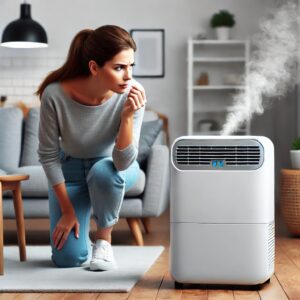
A dehumidifier that smells like gas is one of the most alarming odour problems you can encounter. Unlike musty or stale smells, a chemical or gas-like odour often signals a refrigerant leak — a problem that requires immediate attention for both your safety and the health of your appliance.
This comprehensive guide covers exactly what causes gas and chemical smells from dehumidifiers, whether they’re dangerous, and precisely what steps you should take. Whether you own your dehumidifier or you’re using a hired unit in Auckland, this information could save you from a costly repair — or a genuine safety hazard.
What Causes a Gas Smell From a Dehumidifier?
When your dehumidifier smells like gas, the odour is almost always connected to one of four causes. Understanding the specific source is critical because each requires a different response.
Refrigerant Leak (The Most Common Cause)
Compressor-based dehumidifiers work by circulating refrigerant — a chemical compound that absorbs heat and moisture from the air. Modern dehumidifiers typically use one of two refrigerants:
- R-134a (1,1,1,2-Tetrafluoroethane) — Common in older and smaller residential units. It has a faintly sweet, ether-like chemical smell.
- R-410A (Puron) — Used in most newer, more efficient dehumidifiers. R-410A is odourless in small quantities, but a significant leak can produce a faint chemical or “gas station” smell as it displaces oxygen and interacts with surrounding materials.
- R-290 (Propane) — An increasingly common hydrocarbon refrigerant in energy-efficient units. R-290 has a distinct petroleum gas smell and is mildly flammable, making leaks more concerning.
Refrigerant leaks occur when the sealed copper tubing that carries the refrigerant develops a crack, pinhole, or joint failure. Common causes include:
- Vibration damage — Years of compressor vibration can fatigue copper tubing at solder joints
- Corrosion — Particularly in coastal Auckland areas where salt air accelerates copper deterioration
- Manufacturing defects — Poor brazing or weak joints from the factory
- Physical impact — Dropping or bumping the unit during transport
- Formicary corrosion — A microscopic form of copper corrosion caused by organic acids (from cleaning products, adhesives, or building materials) that creates tiny ant-nest-like tunnels in the tubing
A refrigerant leak is usually gradual. You may notice the gas smell is stronger when the compressor is running and the unit is under load. Over time, the dehumidifier will also become less effective at removing moisture because it’s losing its working fluid.
Overheating Compressor
The compressor is the mechanical heart of your dehumidifier. It pressurises refrigerant gas and pumps it through the system. When a compressor begins to fail, it can produce several gas-like odours:
- Burnt oil smell — Compressors contain lubricating oil. When internal components wear, this oil can overheat and produce a petroleum-like odour
- Hot metal smell — Seized or struggling compressors generate excessive heat, creating a metallic chemical smell
- Refrigerant breakdown products — Extreme compressor heat can partially decompose refrigerant, creating pungent chemical byproducts
An overheating compressor typically also causes the dehumidifier to cycle on and off frequently, make louder-than-normal humming or clicking sounds, and feel unusually hot to the touch around the base or rear of the unit.
Electrical Component Failure
Overheating electrical components can produce chemical odours that people often describe as “gas-like.” The culprits include:
- Failing capacitors — Start and run capacitors contain dielectric fluid. When they bulge or leak, the fluid produces a sharp chemical smell
- Melting wire insulation — PVC insulation on internal wiring produces acrid, chemical fumes when it overheats
- Corroded relay contacts — Electrical arcing at corroded connections creates ozone, which has a sharp, clean chemical smell
- Overloaded circuit board — Control board components can overheat and off-gas chemical fumes
If the smell is more sharp or acrid than a petroleum gas smell, electrical failure is the likely cause. This often overlaps with a burning smell from your dehumidifier, which covers electrical and thermal issues in greater detail.
Off-Gassing From New Components
Brand-new dehumidifiers sometimes emit a mild chemical or gas-like odour during their first few hours of operation. This is typically caused by:
- Protective coatings on heating elements or coils burning off
- Adhesives and sealants curing under heat
- Plastic components off-gassing volatile organic compounds (VOCs)
This type of smell is usually mild, dissipates within 24–48 hours of operation, and is not a cause for concern. However, if a strong chemical smell persists beyond the first few days, treat it as a potential refrigerant or electrical issue.
Is a Gas Smell From a Dehumidifier Dangerous?
Yes — a gas smell from a dehumidifier should always be taken seriously. The level of danger depends on the specific cause:
Refrigerant Leak Risks
| Refrigerant | Toxicity | Flammability | Key Risk |
|---|---|---|---|
| R-134a | Low (ASHRAE A1) | Non-flammable | Oxygen displacement in confined spaces |
| R-410A | Low (ASHRAE A1) | Non-flammable | Oxygen displacement; decomposes to toxic hydrogen fluoride above 250°C |
| R-290 | Low (ASHRAE A3) | Flammable | Fire/explosion risk in enclosed spaces |
While R-134a and R-410A are not directly toxic in the small quantities found in a dehumidifier, they are heavier than air and can displace oxygen at floor level — a concern in small, enclosed rooms like Auckland basements and laundries. Symptoms of refrigerant exposure in a poorly ventilated space include:
- Dizziness and lightheadedness
- Nausea
- Headaches
- Difficulty breathing
- In extreme cases, cardiac arrhythmia (known as “sudden sniffing death syndrome”)
Units containing R-290 (propane) refrigerant present a genuine fire and explosion risk if the gas accumulates in a confined area. These units are clearly labelled with flammability warnings.
Electrical Failure Risks
Chemical smells from electrical component failure carry a direct fire risk. Melting insulation, arcing connections, and leaking capacitors can all ignite surrounding materials. This is particularly dangerous if the dehumidifier is left running unattended — a common scenario in Auckland rental properties and holiday homes.
Environmental Impact
Under New Zealand’s Ozone Layer Protection Act 1996 and the Climate Change Response Act 2002, refrigerant gases are classified as controlled substances. Deliberately or negligently releasing refrigerant into the atmosphere is illegal. R-410A, for example, has a global warming potential (GWP) of 2,088 — meaning one kilogram released has the same warming effect as over two tonnes of CO₂.
Step-by-Step Fix: What to Do When Your Dehumidifier Smells Like Gas
Follow these steps in order when you detect a gas or chemical smell from your dehumidifier:
Step 1: Switch Off and Unplug Immediately
Do not simply turn the dehumidifier off using its controls. Unplug it from the wall socket. If the cause is a refrigerant leak involving R-290 (propane), electrical sparks from switches or relays could theoretically ignite the gas. Removing the plug eliminates this risk entirely.
Step 2: Ventilate the Room
Open all windows and doors in the room. If the dehumidifier was operating in a small enclosed space (cupboard, internal bathroom, basement), ventilate the entire area. Refrigerant gases are heavier than air and pool at floor level, so if possible, use a fan directed towards an open window to push the gas out.
Step 3: Evacuate if the Smell Is Strong
If the gas smell is overwhelming or you experience dizziness, nausea, or difficulty breathing, leave the room immediately. Do not re-enter until the space has been thoroughly ventilated for at least 30 minutes.
Step 4: Identify the Smell Type
Once the room is ventilated and safe to re-enter, try to characterise the odour:
- Sweet, ether-like chemical smell → Likely R-134a refrigerant leak
- Petroleum/gas station smell → Likely R-290 (propane) refrigerant or compressor oil
- Sharp, acrid chemical smell → Likely electrical component failure
- Faint chemical smell (new unit only) → Likely normal off-gassing
- Sulphur or rotten egg smell → This is a different issue — see our guide to dehumidifiers that smell like rotten eggs
Step 5: Check for Visible Signs
With the unit unplugged, look for:
- Oily residue around the compressor, coils, or tubing connections (indicates refrigerant leak — refrigerant carries compressor oil with it)
- Discolouration or melting on wiring, plugs, or circuit boards (indicates electrical failure)
- Ice buildup on the evaporator coils (can indicate low refrigerant charge from a slow leak)
- Swollen or leaking capacitors (cylindrical components on the circuit board)
Step 6: Do NOT Attempt to Repair Refrigerant Leaks Yourself
In New Zealand, only a person holding a current refrigerant handling licence issued under the Ozone Layer Protection Regulations is legally permitted to handle refrigerant gases. This is not a DIY repair. Attempting to recharge or repair refrigerant systems without the proper licence can result in fines and is genuinely dangerous.
Step 7: Contact a Qualified Technician or Replace the Unit
For refrigerant leaks, contact an HVAC technician with a current NZ refrigerant handling licence. Be aware that refrigerant leak repairs on domestic dehumidifiers are often uneconomical — the cost of diagnosis, repair, evacuation, and recharge can exceed the price of a new unit. For units over 5 years old, replacement is usually the better option.
For electrical issues, an appliance repair technician or electrician can diagnose and resolve the problem. If the unit is under warranty, contact the manufacturer first.
When to Call a Professional
While some dehumidifier smells can be resolved with basic cleaning, a gas or chemical smell almost always requires professional assessment. Call a technician immediately if:
- The gas smell is strong or persistent after the unit has been off for several hours
- You find oily residue near the compressor or refrigerant lines
- The dehumidifier has been losing effectiveness (collecting less water than usual)
- You see any signs of melting, discolouration, or burning on electrical components
- The unit makes unusual clicking, buzzing, or grinding sounds
- The dehumidifier trips your circuit breaker or RCD
- You or anyone in the household experiences headaches, dizziness, or nausea when the unit is running
In Auckland, you can find qualified HVAC technicians through the NZ Refrigeration and Air Conditioning Association. For hired dehumidifiers, contact your hire provider immediately — reputable companies like ours will swap the unit out the same day. Check our dehumidifier hire FAQ for details on what to do if a hired unit develops problems.
How to Prevent Gas Smells From Your Dehumidifier
Prevention is far simpler and cheaper than dealing with a refrigerant leak or electrical failure. Follow these maintenance practices to keep your dehumidifier running safely:
Handle With Care During Transport
Most refrigerant leaks in domestic dehumidifiers are caused by physical damage. When moving your unit:
- Always keep it upright — tilting can stress refrigerant line solder joints and allow compressor oil to migrate into the system
- Never drag it across floors; carry or use a trolley
- After transporting, let the unit stand upright for at least 2 hours before switching it on (allows oil to settle back into the compressor)
Ensure Adequate Ventilation
Dehumidifiers generate heat during normal operation. Without adequate airflow, this heat builds up and stresses the compressor and electrical components. Maintain at least 30 cm of clearance on all sides, and never operate a dehumidifier inside a closed cupboard or wardrobe.
Clean Filters and Coils Regularly
Clogged air filters force the compressor to work harder, increasing operating temperatures. Clean or replace filters every 2–4 weeks during heavy use. The evaporator and condenser coils should be gently vacuumed or wiped down every 3–6 months to remove dust buildup.
Monitor Performance
A dehumidifier that gradually collects less and less water — despite consistent humidity levels — may have a slow refrigerant leak. Track how much water your unit collects daily. A sudden or gradual decline is an early warning sign worth investigating before the gas smell appears.
Schedule Professional Servicing
For dehumidifiers used heavily (e.g., in flood restoration, continuous drainage setups, or commercial applications), annual professional servicing is a worthwhile investment. A qualified technician can pressure-test the refrigerant system, check electrical connections, and identify problems before they become safety hazards.
Don’t Ignore Strange Sounds
Unusual sounds often precede unusual smells. Clicking, hissing, or gurgling sounds from the compressor area can indicate refrigerant system problems. A hissing sound in particular may be refrigerant escaping from a small leak — and you may smell the gas before you hear the hiss. If your dehumidifier also produces a fishy smell, that could indicate a separate electrical issue worth investigating.
Auckland-Specific Tips for Gas Smells From Dehumidifiers
Auckland’s unique climate and housing conditions create specific challenges when it comes to dehumidifier maintenance and refrigerant system integrity:
Coastal Corrosion
If you live in coastal Auckland suburbs — Devonport, Mission Bay, Takapuna, the Hibiscus Coast, or anywhere within a few kilometres of the harbour — salt-laden air accelerates corrosion on copper refrigerant tubing. This significantly increases the risk of pinhole leaks developing over time. Consider placing dehumidifiers away from direct exposure to sea air, and inspect units more frequently if you’re in a coastal property.
Auckland’s Extended Humidity Season
Auckland’s subtropical climate means dehumidifiers often run for 6–8 months of the year (roughly April through November). This extended operating period puts more stress on compressors and refrigerant systems than in drier regions. Units that might last 10+ years in Canterbury may develop problems after 5–7 years in Auckland due to the heavier workload.
Older Auckland Homes
Many Auckland homes — particularly villas, bungalows, and state houses — have poor subfloor ventilation, single glazing, and limited insulation. These homes require dehumidifiers to work harder and longer, which accelerates wear on the compressor and increases the likelihood of gas-related issues. If your dehumidifier is struggling to keep up, it may be undersized for the space. Our dehumidifier hire service can help you find the right capacity unit for your Auckland home.
Rental Property Considerations
Under the Healthy Homes Standards, Auckland landlords must address moisture and ventilation issues. If a dehumidifier provided as part of a rental property develops a gas smell, tenants should immediately notify their landlord or property manager. Do not continue operating a unit that smells like gas — the landlord is responsible for providing safe, functioning equipment.
Earthquake Risk
While Auckland’s seismic risk is lower than other parts of New Zealand, the region still experiences occasional earthquakes. Even a moderate shake can stress refrigerant line connections. After any felt earthquake, it’s worth giving your dehumidifier a quick check — listen for unusual sounds and watch for any new smells when it next runs.
Gas Smell vs. Other Dehumidifier Odours
Not sure if what you’re smelling is actually a gas odour? Different smells indicate very different problems:
| Smell Description | Likely Cause | Severity | Guide |
|---|---|---|---|
| Chemical / gas / petroleum | Refrigerant leak or compressor failure | High — stop using immediately | This page |
| Rotten eggs / sulphur | Bacterial growth, stagnant water | Moderate | Rotten egg smell guide |
| Burning / smoke | Electrical failure, overheating motor | High — stop using immediately | Burning smell guide |
| Fishy | Overheating electrical insulation | High | Fishy smell guide |
| Urine / ammonia | Mould, bacterial growth, pet contamination | Moderate | Urine smell guide |
Frequently Asked Questions
Can I still use my dehumidifier if it smells slightly like gas?
No. Even a faint gas smell should be investigated before continuing to use the unit. A small refrigerant leak will only get worse over time, and the dehumidifier’s performance will decline as it loses refrigerant charge. Unplug the unit, ventilate the area, and have it inspected by a qualified technician before using it again.
How much does it cost to repair a dehumidifier refrigerant leak in New Zealand?
Refrigerant leak repairs on domestic dehumidifiers typically cost between $250–$500+ NZD, including leak detection, repair, system evacuation, and recharge. Given that a new mid-range dehumidifier costs $300–$600, repair is often uneconomical for units over 3–4 years old. For short-term needs, hiring a dehumidifier in Auckland is a cost-effective alternative while you decide whether to repair or replace.
Is the refrigerant in my dehumidifier the same as Freon?
Not exactly. “Freon” is a brand name originally associated with R-12 and R-22 refrigerants, which have been phased out in New Zealand due to their ozone-depleting properties. Modern dehumidifiers use R-134a, R-410A, or R-290 — none of which are technically Freon, though many people still use the term colloquially. Regardless of the specific refrigerant, a leak should always be addressed promptly.
Can a dehumidifier gas leak make me sick?
In a well-ventilated room, the small amount of refrigerant in a domestic dehumidifier (typically 100–400 grams) is unlikely to cause serious harm. However, in a small, enclosed space with poor ventilation — such as a cupboard, small bathroom, or unventilated basement — leaked refrigerant can displace oxygen and cause dizziness, nausea, headaches, and in extreme cases, loss of consciousness. Children and pets are at greater risk because they are closer to floor level where heavier-than-air gases accumulate.
My dehumidifier smells like gas but still works — should I worry?
Absolutely. A dehumidifier can continue to operate with a partial refrigerant charge, but its efficiency drops significantly and the leak will worsen. More importantly, you’re being continuously exposed to leaked refrigerant gas while using it. The fact that it still functions does not mean it’s safe to operate. Switch it off, have it inspected, and consider a replacement or hiring a dehumidifier in the meantime.
📖 Part of: Dehumidifier Smell Issues
Experiencing a different smell from your dehumidifier? Browse our complete smell troubleshooting series:
- Gas / Chemical Smell (this guide)
- Dehumidifier Smells Like Rotten Eggs
- Dehumidifier Smells Like Burning
- Dehumidifier Smells Like Fish
- Dehumidifier Smells Like Urine
Need a dehumidifier that works properly? Check our Auckland dehumidifier hire prices or read the dehumidifier hire FAQ.