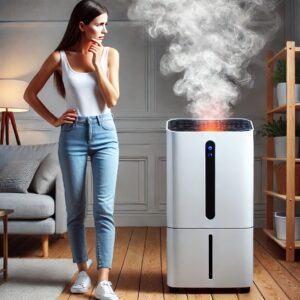
If your dehumidifier smells like burning, plastic, or has a hot chemical odour, don’t ignore it. A burning smell from a dehumidifier can range from a harmless new-unit off-gassing issue to a serious electrical fault that poses a fire risk. Similarly, a dehumidifier that smells like plastic or chemicals may indicate overheating components, melting wiring insulation, or degraded internal parts.
This comprehensive guide covers everything you need to know about burning and plastic smells from dehumidifiers — what causes them, whether they’re dangerous, how to fix them, and when it’s time to call in a professional or hire a replacement dehumidifier in Auckland.
What Causes a Burning Smell From a Dehumidifier?
A dehumidifier burning smell can stem from several distinct causes, each with different levels of severity. Understanding the source helps you determine the right course of action.
1. New Unit Off-Gassing
Brand-new dehumidifiers often emit a mild burning or plastic smell during their first few hours of operation. This is caused by manufacturing residues — lubricants, protective coatings, and plastic compounds — burning off as the motor and compressor heat up for the first time. This is generally harmless and should dissipate within 24–48 hours of continuous use.
2. Overheating Motor or Compressor
The most common cause of a persistent burning smell is an overheating motor. Dehumidifier motors work hard, especially during Auckland’s humid summer months when they run for extended periods. When a motor overheats, the varnish on its copper windings begins to break down, producing a distinctive acrid, burning odour. Common causes of motor overheating include:
- Blocked airflow — dust clogging the intake filter or exhaust grilles forces the motor to work harder
- Continuous operation — running a unit 24/7 without rest periods in very humid conditions
- Failing capacitor — a weakened start or run capacitor makes the motor draw excess current
- Worn bearings — increased friction generates heat and can produce a hot metallic smell
3. Electrical Faults and Wiring Issues
Perhaps the most dangerous cause of a burning smell is an electrical fault. Loose connections, corroded terminals, or damaged wiring can create electrical resistance, which generates heat. This may melt wire insulation — producing a plastic or chemical burning smell — or even cause arcing. Specific electrical issues include:
- Melting wire insulation — PVC insulation on internal wiring melts at around 70–105°C, releasing toxic fumes including hydrogen chloride
- Burnt relay or contactor — switching components can arc and burn over time
- Damaged power cord — frayed or pinched cords create hot spots
- Faulty PCB (control board) — electronic components can overheat and emit a sharp chemical smell
4. Dust and Debris Burning on Hot Components
Accumulated dust inside the dehumidifier can settle on the compressor, motor housing, or heat exchanger coils. When these components heat up during operation, the dust literally burns, creating a noticeable smell. This is especially common after a unit has been in storage for several months — as often happens in Auckland between drier spells.
5. Melting Plastic Components
If your dehumidifier smells like plastic specifically, an internal plastic component may be warping or melting due to proximity to a heat source. The compressor discharge line, for instance, can reach temperatures above 80°C. If a plastic housing piece, cable tie, or duct comes in contact with hot refrigerant lines, it will melt and produce a strong plastic odour. This often happens after a unit has been dropped, moved roughly, or reassembled incorrectly after cleaning.
6. Failed Compressor
A failing compressor may overheat severely before it seizes. When the internal motor windings in a hermetically sealed compressor begin to degrade, the refrigerant oil breaks down, and the compressor can emit a strong, oily burning smell. This is often accompanied by the unit cycling on and off repeatedly or making unusual buzzing or clicking sounds.
Is a Burning Smell From a Dehumidifier Dangerous?
The short answer: it can be. Here’s a risk breakdown by smell type:
| Smell Type | Likely Cause | Risk Level |
|---|---|---|
| Faint plastic smell (new unit) | Manufacturing off-gassing | 🟢 Low — ventilate the room |
| Dusty/dry burning smell | Dust on hot components | 🟡 Low-Medium — clean the unit |
| Hot electrical/metallic smell | Motor or bearing overheating | 🟠 Medium — turn off and inspect |
| Strong plastic/chemical smell | Melting wiring or components | 🔴 High — turn off immediately |
| Acrid, oily burning smell | Compressor failure | 🔴 High — turn off immediately |
Fire Risk
Dehumidifiers have been the subject of multiple product recalls worldwide due to fire risk. Overheating components, particularly in older or poorly maintained units, can ignite surrounding dust or plastic housings. If you notice a strong burning smell accompanied by visible smoke, discolouration of the plastic casing, or a unit that’s hot to the touch, unplug it immediately and do not use it again until it has been professionally inspected.
Toxic Fumes
Burning PVC wire insulation releases hydrogen chloride gas, which is irritating to the eyes, throat, and lungs. Melting ABS or polycarbonate plastics can release styrene and bisphenol A vapours. While brief exposure at low concentrations is unlikely to cause lasting harm, you should ventilate the room immediately and avoid breathing the fumes directly. People with asthma or respiratory conditions should leave the room.
Refrigerant Leaks
In severe compressor failures, refrigerant (typically R-410A or R-134a in modern units) can leak. While these refrigerants are generally low-toxicity, in a confined space they can displace oxygen. A sweet, slightly chemical smell combined with a burning odour may indicate both a refrigerant leak and an electrical issue — this warrants immediate action.
Step-by-Step Fix for a Burning Smell
Follow this troubleshooting process to identify and resolve the cause of a dehumidifier burning smell:
Step 1: Turn Off and Unplug Immediately
Safety first. If you smell burning, switch the unit off and unplug it from the wall. Do not simply turn it off using the control panel — physically disconnect the power cord. Wait at least 15 minutes for the unit to cool down before proceeding.
Step 2: Assess the Smell
While the unit cools, think about the smell characteristics:
- Is it a faint, plasticky smell? → Likely off-gassing or dust (less urgent)
- Is it a sharp, acrid electrical smell? → Likely a wiring or motor issue (more urgent)
- Is it accompanied by smoke or visible melting? → Do not attempt to fix — call a professional
Step 3: Check the Power Cord and Plug
Inspect the power cord along its entire length for damage, kinks, discolouration, or melted spots. Check the plug — if the pins are blackened or the plastic around the plug is warped, the issue may be a poor connection at the wall socket rather than the dehumidifier itself. Try a different power outlet.
Step 4: Clean or Replace the Air Filter
Remove the air filter and inspect it. A heavily clogged filter restricts airflow, causing the motor and compressor to overheat. Wash the filter under warm running water, let it dry completely, and reinstall. If the filter is damaged or permanently discoloured, replace it.
Step 5: Inspect and Clean Internal Components
If you’re comfortable doing so, remove the outer casing (usually held by a few screws) and visually inspect the interior:
- Look for burn marks on wiring, the control board, or connectors
- Check for melted plastic — cable ties, ducting, or housing pieces near the compressor
- Look for excessive dust build-up on the compressor, motor, and coils
- Use a vacuum with a brush attachment to gently clean dust from internal components
Step 6: Test Run in a Ventilated Area
After cleaning, reassemble the unit and plug it in. Run it in a well-ventilated area (ideally a garage or near an open window) for 30–60 minutes. If the burning smell has stopped, the issue was likely dust or minor off-gassing. If the smell persists, continue to the next step.
Step 7: Check the Capacitor (Advanced)
A failing capacitor is a common cause of motor overheating. If you have a multimeter, you can test the capacitor for correct capacitance. A bulging, leaking, or cracked capacitor should be replaced. This is an inexpensive part (typically $15–$40) but requires care when handling due to stored electrical charge.
Step 8: Stop and Seek Professional Help
If none of the above resolves the issue, or if you found burn marks, melted components, or damaged wiring, stop using the dehumidifier. The unit needs professional repair or replacement. In many cases, it’s more cost-effective to hire a dehumidifier while the situation is resolved.
When to Call a Professional
Not every burning smell warrants a service call, but these warning signs mean you should not attempt a DIY fix:
- Visible smoke or sparks — this is an immediate fire hazard
- Blackened or melted wiring — indicates a serious electrical fault that could recur
- The unit trips your RCD (residual current device) or circuit breaker — this means current is leaking to earth, which is dangerous
- Burning smell returns after cleaning — suggests an internal component failure
- The compressor makes grinding, buzzing, or clicking noises alongside the smell — likely a compressor or motor failure
- The unit is more than 8–10 years old — older units with persistent burning smells are often not worth repairing
- You can smell burning but can’t identify the source — hidden faults inside sealed components need specialist tools to diagnose
In Auckland, most appliance repair services can assess a dehumidifier for $80–$150 including a call-out fee. However, if the repair cost exceeds $200–$300, you may be better off replacing the unit entirely or using a dehumidifier hire service for the season.
How to Prevent Burning and Plastic Smells
Prevention is far easier (and safer) than troubleshooting. Follow these maintenance habits to keep your dehumidifier running cleanly:
Regular Filter Cleaning
Clean the air filter every 2 weeks during heavy use. In Auckland’s humid months (November through April), most dehumidifiers run daily, and filters clog quickly — especially in homes with pets, carpet, or near renovation work.
Annual Deep Clean
Once a year, remove the outer casing and vacuum the internal components. Pay particular attention to dust around the compressor, motor, and condenser coils. This prevents dust from accumulating to the point where it burns during operation.
Ensure Proper Ventilation
Position your dehumidifier at least 30 cm from walls and furniture on all sides. Ensure the intake and exhaust grilles are never blocked by curtains, clothing, or other items. Restricted airflow is the number one cause of motor overheating.
Don’t Run on Extension Leads
Dehumidifiers draw significant current (typically 3–6 amps). Running one on a thin extension lead or multi-board can cause the connection to overheat, producing a burning smell at the plug or socket — not the dehumidifier itself. Always plug directly into a wall socket.
Use a Timer or Humidistat
Modern dehumidifiers have built-in humidistats that automatically stop the unit when target humidity is reached. Use this feature rather than running the unit continuously. If your unit doesn’t have one, use a plug-in timer to give the motor regular rest periods.
Store Properly Between Seasons
When storing your dehumidifier over winter, clean it thoroughly, empty and dry the water tank, and cover it to prevent dust accumulation. Store it upright in a dry place. This prevents the “first start-up burning smell” when you bring it out again in spring.
Auckland-Specific Tips
Auckland’s subtropical climate creates unique challenges for dehumidifier owners:
High Humidity Season (November–April)
Auckland regularly sees relative humidity above 80% during the warmer months, particularly in coastal suburbs like Mission Bay, Devonport, and the North Shore. During these periods, dehumidifiers run for extended hours, putting extra strain on motors and compressors. This is when most burning smell incidents occur. Consider using your unit’s built-in timer or running it in cycles (6 hours on, 2 hours off) rather than continuously.
Mould Season and Overwork
Auckland’s mould season (late autumn through winter) drives many homeowners to run dehumidifiers harder than the units are designed for. Older rental properties in areas like Mt Eden, Grey Lynn, and Ponsonby are particularly prone to damp, and dehumidifiers in these homes often work overtime. If your unit smells like burning during peak mould season, it may simply be overloaded — hiring a second unit to share the load is often the safest solution.
Salt Air and Corrosion
If you live near the coast, salt-laden air can accelerate corrosion of electrical connections inside your dehumidifier. Corroded connections create resistance, which generates heat and can produce burning smells. Coastal Auckland residents should inspect their dehumidifier’s internal connections annually and clean any visible corrosion with electrical contact cleaner.
Power Supply Considerations
Some older Auckland homes (particularly villas and bungalows built before the 1970s) have aging electrical wiring that may not handle the sustained load of a large dehumidifier well. If you notice the burning smell seems to come from the wall socket rather than the unit itself, have an electrician check your home’s wiring. This is especially important in areas with older housing stock like Parnell, Herne Bay, and Remuera.
Burning Smell vs Other Dehumidifier Odours
Not sure if what you’re smelling is actually a burning smell? Different odours from dehumidifiers have different causes:
- Burning or plastic smell — electrical fault, motor overheating, or melting components (this guide)
- Gas or chemical smell — possible refrigerant leak or off-gassing from internal components
- Fishy smell — often caused by overheating electrical components (bakelite or certain plastics emit a fish-like odour when hot)
- Urine or ammonia smell — typically bacterial growth in the water tank or on the evaporator coils
Interestingly, a fishy smell from a dehumidifier can actually be an early warning sign of the same electrical issues that cause a burning smell. If your unit smells like fish, read our guide to fishy dehumidifier smells — the cause may be overheating plastic components that haven’t yet reached the point of producing a full burning odour.
Should You Repair or Replace a Dehumidifier With a Burning Smell?
This depends on the cause and the age of your unit:
| Scenario | Recommendation |
|---|---|
| New unit, faint smell, first 48 hours | Keep running — it’s normal off-gassing |
| Dust build-up causing smell | Clean thoroughly and continue using |
| Clogged filter causing overheating | Clean/replace filter — problem solved |
| Failed capacitor | Replace capacitor ($15–$40 part) |
| Damaged wiring or burnt connections | Professional repair if unit is <5 years old |
| Compressor failure | Replace the unit — compressor repair costs more than a new dehumidifier |
| Unit is 8+ years old with electrical faults | Replace — not worth the repair cost or safety risk |
If your dehumidifier needs repair or replacement and you can’t be without one (especially during Auckland’s humid months), check out our dehumidifier hire options for an immediate solution while you sort out a permanent fix. You can also visit our dehumidifier hire FAQ for answers to common questions about rental units.
Frequently Asked Questions
Is it normal for a new dehumidifier to smell like burning?
Yes, a faint plastic or burning smell during the first 24–48 hours of operation is normal and caused by manufacturing residues burning off. Run the unit in a well-ventilated room. If the smell persists beyond 48 hours or becomes stronger, there may be a fault — turn it off and investigate.
Can a dehumidifier with a burning smell cause a fire?
Yes, in some cases. Electrical faults, melting wiring, and overheating motors can all potentially ignite surrounding materials. Dehumidifiers have been subject to fire-related product recalls. If you smell burning accompanied by smoke, discolouration, or extreme heat from the unit, unplug it immediately and do not use it again without professional inspection.
Why does my dehumidifier smell like burning plastic when I turn it on after storage?
Dust that accumulated during storage is burning off on hot internal components. This is common and usually resolves within an hour. To prevent it, clean your dehumidifier thoroughly before storing it and cover it to keep dust out. If the smell doesn’t clear within a couple of hours, check for melted components near the compressor.
Should I keep using my dehumidifier if it smells like burning?
It depends on the severity. A faint, temporary smell after first start-up or after storage is generally safe. However, a persistent or strong burning smell means you should stop using the unit immediately, unplug it, and either troubleshoot the cause yourself or have it professionally inspected before using it again.
How much does it cost to repair a dehumidifier with a burning smell in Auckland?
Repair costs in Auckland typically range from $80–$150 for a diagnostic call-out, plus parts. A capacitor replacement might cost $50–$80 total, while motor or wiring repairs can run $150–$300. If the repair exceeds $200–$300, it’s often more economical to replace the unit or hire a dehumidifier for the season.